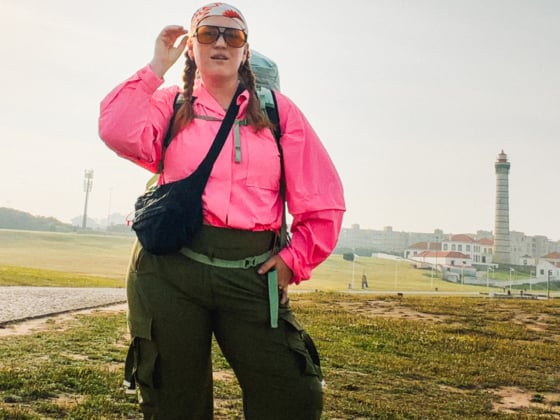
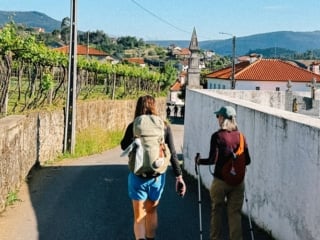
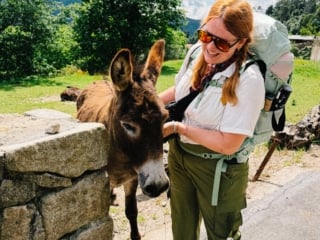
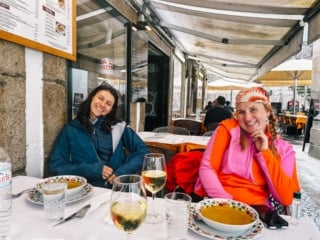
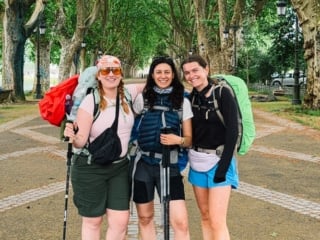
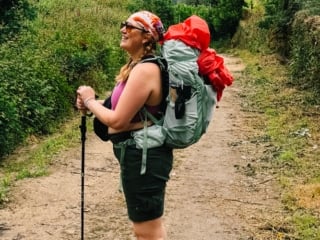
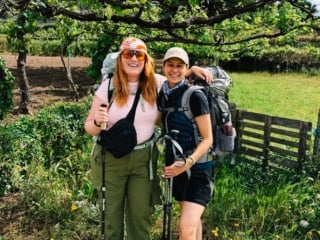
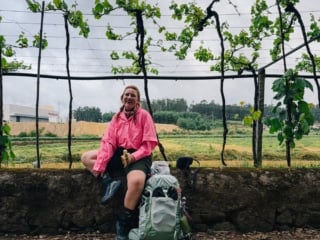
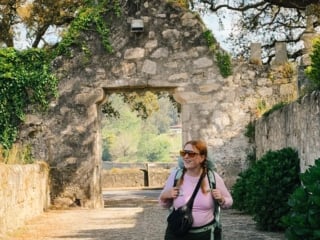
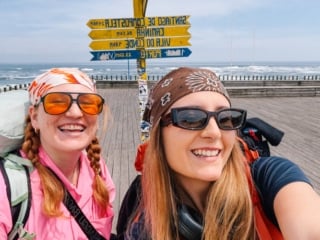
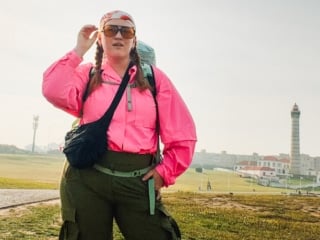
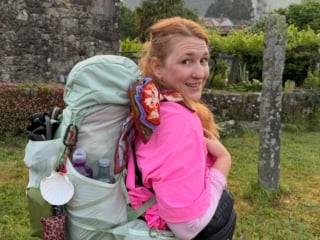
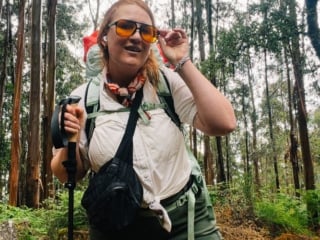
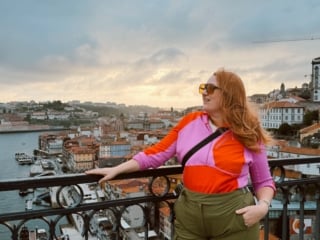
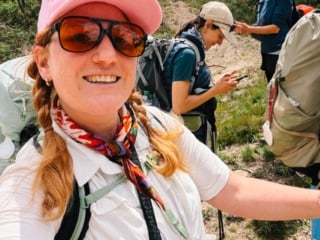
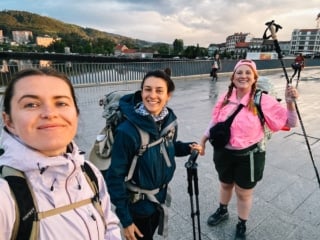
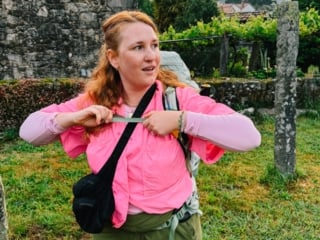
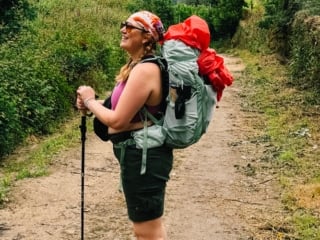
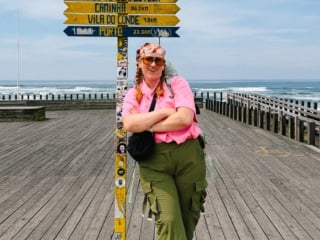
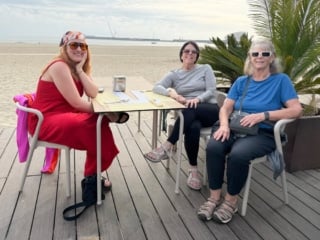
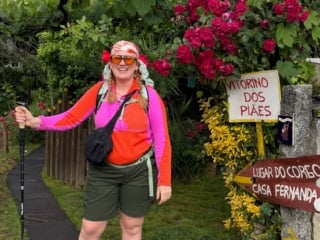
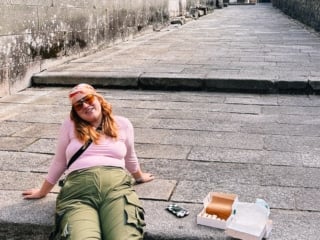
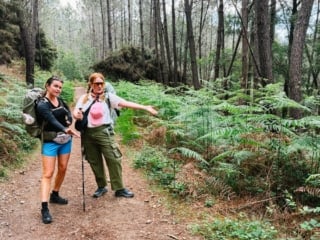
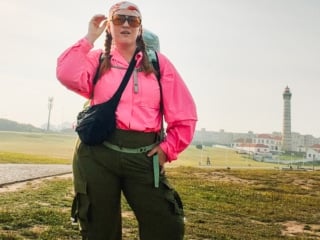
I walked the Camino Santiago Portugal in 14 days, covered about 160 miles (257 km), got rained on more times than I expected, developed plantar fasciitis on day eight, petted a very opinionated donkey in a forest who yelled at me when I tried to leave, and ate the best sardines of my life for 10 euros at a restaurant while a marching band paraded past the window.
I came home changed in a way that’s hard to explain to people who haven’t done it, so I’m just going to tell you everything instead.
This is my full Camino de Santiago Portugal itinerary: every town, every hostel, every shortcut and mistake across the Camino Portugués from Porto to Santiago de Compostela. I walked the central route, starting with two days on the Portuguese Coastal route before cutting inland, and I have opinions about both that I’ll get into shortly.
*Images
If you’re here for gear, my complete Camino de Santiago packing list covers everything I brought across 160 miles of mud, cobblestone, and surprise rain. This post is purely the itinerary.


What Is the Camino de Santiago Portugal?
The Camino de Santiago is a network of ancient pilgrimage routes that all lead to the Cathedral of Santiago de Compostela in northwestern Spain, where the remains of Saint James are believed to be buried, and people have been walking it for over a thousand years.
The Camino de Santiago Portuguese way, also called the Camino Portugués, or the Portuguese Camino, starts in Lisbon or Porto, travels north through Portugal and into Galicia, Spain, and is the second most popular Camino route in the world after the Camino Francés.
There are two main options for the Portuguese way: the Coastal route and the Central route. Both end in Santiago, both are beautiful in completely different ways, and I’ll break down the real differences in a dedicated section below.
The short version is that the coastal gives you the Atlantic coast and flat boardwalks, while the central gives you rolling vineyards, medieval villages, and some genuine mountain climbing.
Most people use Porto as their starting point, some start in Lisbon for a longer walk, and some start in Tui, Spain, which is the last possible starting point if you want to earn your Compostela certificate on this route. I started in Porto and I’d recommend it without hesitation, and I’ll explain why later in this post.


Camino de Santiago Portugal Distance
The Camino de Santiago Portugal distance from Porto to Santiago is approximately 280 km (174 miles) on the central route, with the coastal route coming in at a similar total. Plan for roughly 12 to 15 walking days depending on your daily mileage and whether you build in any rest days.
I did it in 14 and felt like that was the right pace, though plenty of people finish in 12. I have a friend who just walked the Camino Coastal route and he did it in 9 days, though I think he ended up walking 30km each day and it was too hard.
Planning Your Camino Portugués Itinerary
When to Walk The Camino
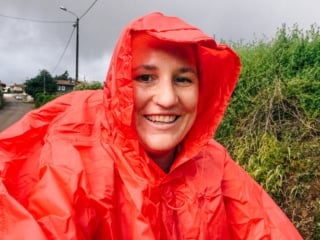
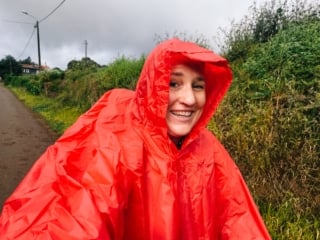
I walked at the end of April and into early May, and the weather was way cooler than I expected: mostly low 60s Fahrenheit with a lot of rain, and only one or two days that hit the mid 70s. I’m really glad I packed layers and a bright rain poncho. Summer (June through August) gets hot and the trail gets more crowded.
Fall is similar to spring with cooler mornings and possible rain. Winter is cold and quiet, which works for some people.
My recommendation is late April through early June, or September through October, for manageable temperatures and green countryside without the peak summer crowds.
How Many Days Does the Camino Portugués Take?
Most people do Porto to Santiago in 12 to 16 days. I did it in 14. If you’re a strong walker and push your daily mileage you could finish in 12, and if you’re taking it slow and stopping at every cafe that looks good (which is a good strategy), budget closer to 15 or 16.
What I’d say is don’t rush it. The Camino rewards the people who lean into it.
The Buen Camino App
Download the Buen Camino app before you leave home. It maps the entire route stage by stage, shows you the distance to each town, and links to accommodation you can book directly.
I used it every single day as my primary navigation tool. That said, check Google Maps occasionally too, because sometimes there’s a shortcut that saves you 20 or 30 minutes of walking, and when you’re on day 10 with sore feet, cutting even a mile off your day makes a real difference.


Booking Accommodation
I used Booking.com for most places and WhatsApp for a handful of albergues that require direct reservations with the owner.
In Portugal, you can stay fairly flexible and book a day or two ahead without much stress. Once you cross into Spain at Tui, book everything for the rest of your trip immediately. The last stretch of the Camino Portugués gets significantly busier because the Coastal route merges with the Central route, and people also start fresh from Tui since it’s the last valid starting point.
I watched our whole group scramble in O Porriño trying to find open beds for the remaining days, and it was stressful in a way that was completely avoidable.
Bringing Euros
In the major towns you can use credit cards, but in smaller villages along the route you’ll need cash. I took out 500 euros at the start and ended with about 60 left, so I used almost all of it.
Bring a coin purse too, because you accumulate a lot of euro coins and you’ll need them for espressos, stamps, and the occasional bathroom. Take out your euros at the Lisbon or Porto airport so you’re not hunting for an ATM in a small village.


Coastal Route vs. Central Route: What You Need to Know
I’m writing a full separate post comparing these two routes in detail, but here’s what you need to know before looking at a Camino de Santiago Portugal map and making your decision.
Portuguese Coastal Route
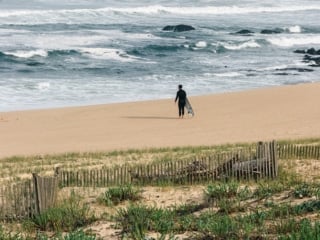
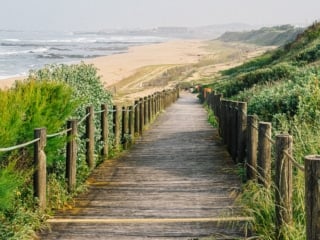
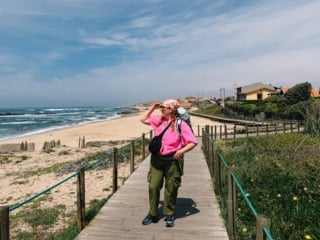
The Portuguese Coastal route runs along the Atlantic coast through northern Portugal, and it’s flat, boardwalk-heavy, and full of ocean views. There are more facilities along the way, more beach cafes, and easier access to bathrooms, which genuinely matters when you’re walking all day.
The Camino de Santiago Portugal coastal route stages are mostly straightforward with less elevation change than the central, which makes it a good option if you’re concerned about your knees or aren’t used to big climbs.
What I’ll be honest about is that some sections of the boardwalk aren’t well maintained, with holes you have to watch for so you don’t twist an ankle, and the entire route is exposed with very little shade.
My friends Noelle and Martha walked the coastal the whole way and loved it, but they also had a full day where the boardwalk just stopped and they had to navigate by footprints through sand dunes. It’s not always perfectly marked.
Camino de Santiago Central Route
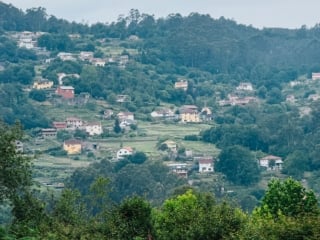
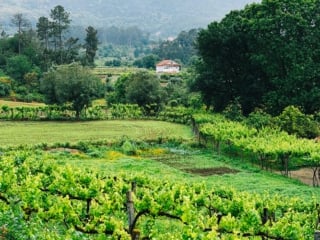
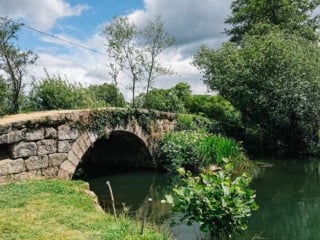
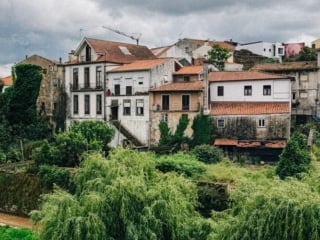
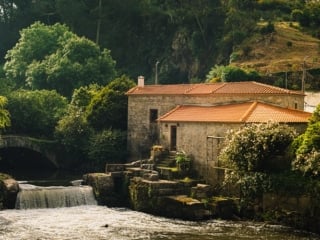
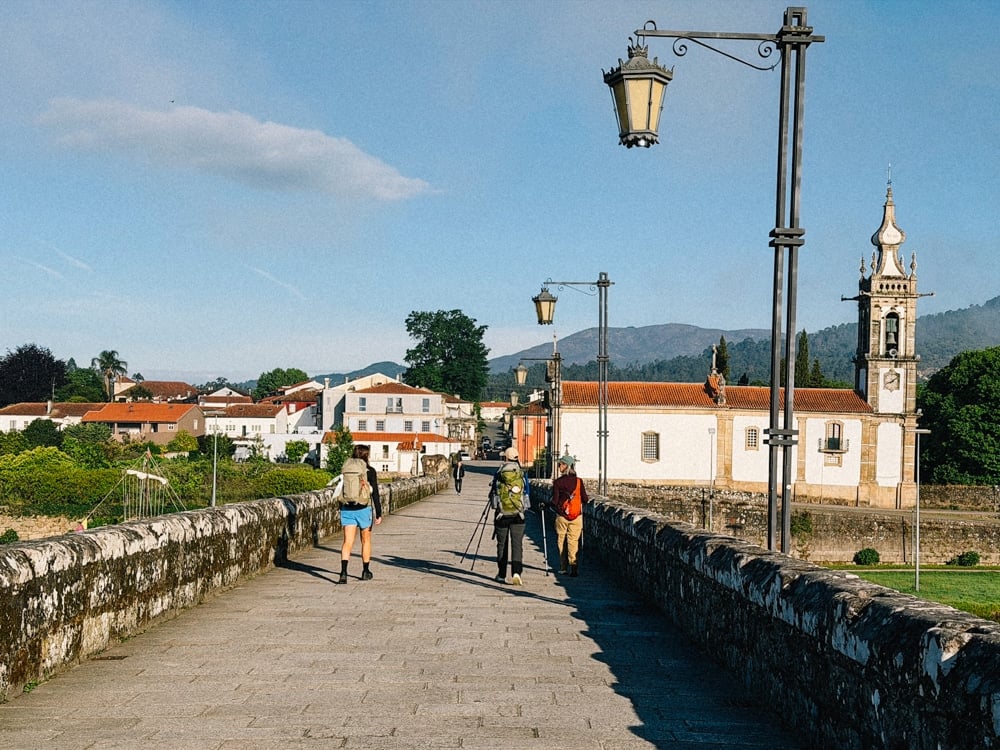
The central route is the traditional route inland, and it’s what I’d picture if someone said “Camino” to me: rolling green hills, vineyards, stone villages, forests, rivers, farm animals, and flowers on balconies. The terrain is more varied, the towns are charming in a way that genuinely surprised me, and the route is extremely well marked throughout Portugal.
There is one day with significant elevation, roughly 2,500 feet of climbing up a mountain, so if that’s a dealbreaker for you, factor it in.
The central route is quieter in Portugal, which I think is actually one of its best features, because it’s how you end up walking with the same group of people day after day and building your Camino family. Once you cross into Spain and the coastal route merges in, it gets busier.
Which Route Should You Pick?
Choose the Portuguese Coastal route if:
- You don’t live near the ocean and want Atlantic coast views every day
- You prefer flatter terrain with less elevation on your knees
- You want more beach cafes, facilities, and bathrooms along the way
Choose the Camino de Santiago Central route if:
- You want rolling hills, vineyards, medieval villages, and forest trails
- You’re comfortable with some significant elevation including one big mountain day
- You prefer a quieter trail with a smaller, more tight-knit group of fellow pilgrims
Do both if:
- You want a taste of the coast before cutting inland to the central route
- You have enough days to start coastal and switch over at Vila do Conde without feeling rushed
That’s exactly what I did, and I’d do it the same way again.


My Day-by-Day Camino Portugués Itinerary
Before You Start: Porto
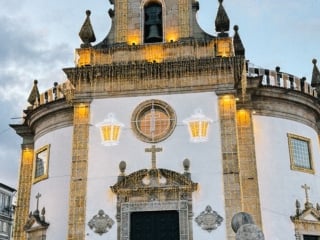
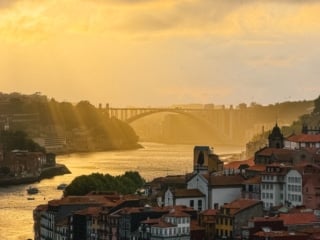
I flew into Porto on April 29th and stayed at Casa dos Louis by Shadow, which is right in the Ribeira area near São Bento station, very close to the Porto Cathedral where you officially begin your Camino, and a short walk down to the river. They have free breakfast and the location is genuinely perfect. I’d stay there again.
Do a grocery run the morning you start. Pick up two plastic water bottles (I used a 1.5L and a 0.75L, which fit perfectly in the Osprey side pockets), some snacks, and a pack of instant coffee.
Not every cafe on the trail opens early, and you’re going to want coffee before the world is awake. Get your official pilgrim’s credential and your Camino shell sorted before you arrive if you can. You’ll get your first stamp at the Porto Cathedral plaza, and that’s where it all begins.


Day 1: Porto to Matosinhos
- Distance: approximately 12 km (7.5 miles)
- Route: Portuguese Coastal route
- Where I stayed: Fishtail Hostel, Matosinhos
Your first day is intentionally short, which is the right call because you’re jet-lagged and your body hasn’t figured out yet what you’re asking it to do. I left my hotel around 9am, later than most pilgrims start (7 to 7:30 is typical), because I knew I needed the sleep after traveling.
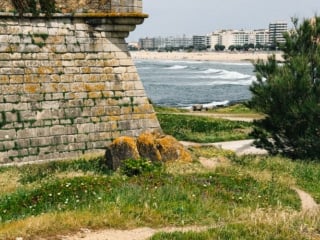
I stopped at a fortress just outside Matosinhos that cost 50 cents to enter and had lovely views and some historical artifacts, which was a nice slow start.
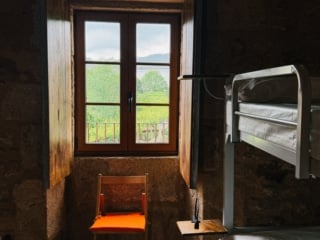
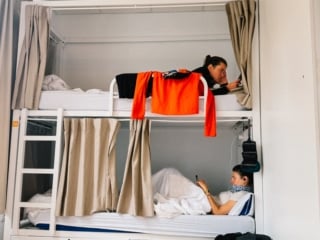
Matosinhos is a cute beach town right outside Porto and a genuinely lovely place to spend your first night. The Fishtail Hostel has bunks with private curtains and lockers, provides blankets and towels, has a full kitchen, and a laundry drying area.
I did laundry my first night because I’d been in my clothes since the plane, and even though it was cool and rainy, everything was hung and dry enough by morning.
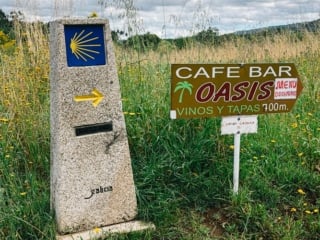
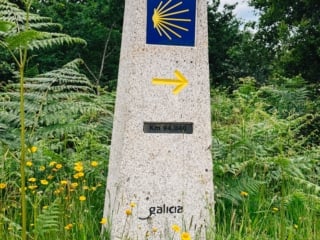
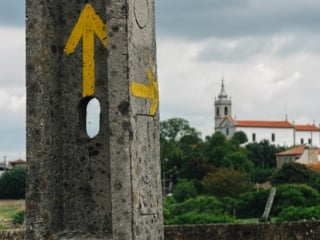
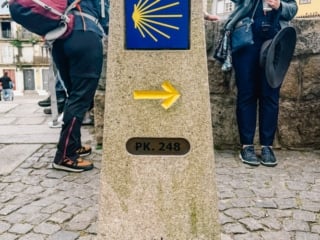
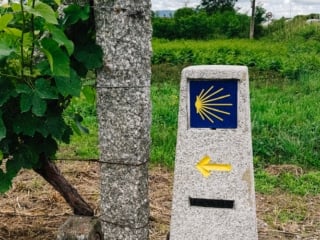
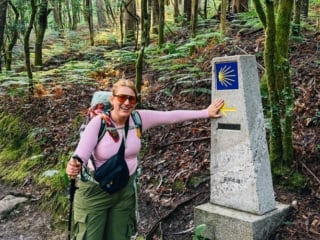
One thing worth knowing about the Camino from the start: you follow yellow arrows, and once you start looking for them they’re everywhere. At every confusing intersection, every alley, every wall, there’s an arrow. You can navigate the entire Camino without an app if you trust the arrows, and a lot of people do exactly that.


Day 2: Matosinhos to Vila do Conde
- Distance: approximately 24 km (15 miles)
- Route: Portuguese Coastal route
- Where I stayed: Cachinnans Hostel and Apartment, just outside Vila do Conde
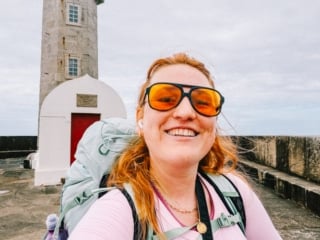
This is a longer day and a beautiful one when the sun comes out, which it did for me. I passed the Farol de Leça lighthouse and the historic Capela da Boa Nova church, both worth a pause. Most of this day is on boardwalk along the Atlantic coast, which is scenic but exposed, and the boards aren’t always in perfect shape so you do have to watch your footing.
Real talk: the coastline here looks a lot like Northern California to me, with the dunes and the beach grass and the grey-blue water, which is beautiful but didn’t have the novelty I was expecting.
That’s personal, and it’s a big part of why I switched to the central route the next day, but if you’re not from the West Coast of the US or you’ve been missing the ocean, you’re going to love this stretch.
I met up with my friend Nicole about halfway through and we walked the last section together, which made the long afternoon much better. This is the day I learned that your body hurts the most around days two and three, and that you have to stretch before you get up and after you walk. I hadn’t been doing that and I felt it everywhere by the time I got to Vila do Conde.


Day 3: Vila do Conde to Arcos (Switching to the Central Route)
- Distance: approximately 11 km (7 miles)
- Route: Coastal to Central transition
- Where I stayed: Villa d’Arcos B&B, Arcos
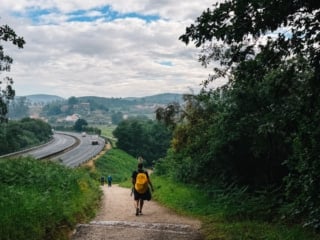
This is the day I cut inland from the coast to join the Camino de Santiago central route, and I want to be honest with you about this transition walk: I should have taken an Uber. I’ve since talked to multiple women who walked it and said the same thing, and one whose husband had done it before specifically advised her to take a car for safety reasons.
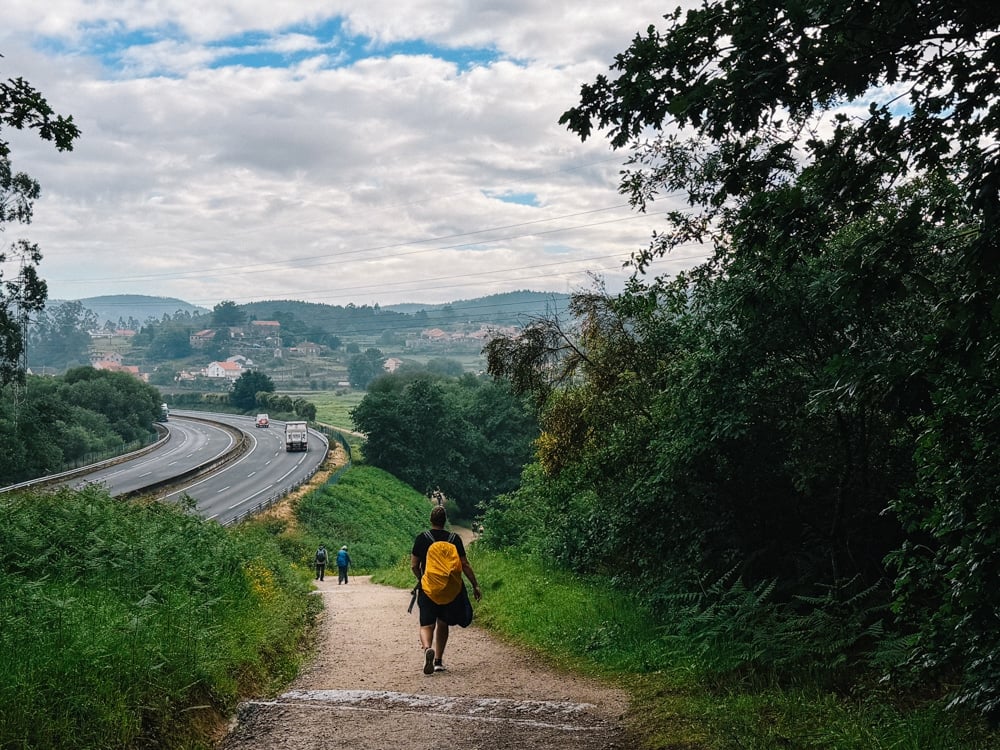
It’s on the route, I saw a handful of other pilgrims doing it, but there’s a lot of walking on the side of roads in fairly rural areas where cars aren’t used to seeing pilgrims, and there aren’t many cafe stops or facilities along the way.
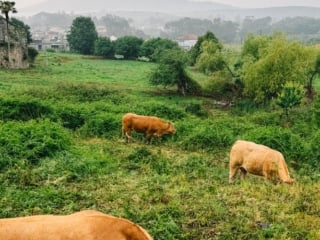
That said, the moment I got away from the coast and started seeing rolling hills, old stone churches, waterfalls, and farm animals, I knew I’d made exactly the right call switching routes. It was immediately everything I’d pictured when I imagined walking the Camino Portugués.
A note on the accommodation in Arcos: Villa d’Arcos is quirky in the way that’s only charming in retrospect. It’s a woman’s home converted into a B&B, decorated with an impressive collection of religious statues, and she doesn’t tell you the price of the pilgrim dinner until after you’ve eaten it (it was 37 euros, which is nearly four times what a pilgrim dinner typically costs). The town itself is very quiet with just one cafe.
I’d recommend pushing on to Rates instead, which is a bit further and has more going on. The only reason I don’t fully regret staying in Arcos is that I met my friend Dani at the cafe while waiting to check in, and she ended up becoming my Camino walking partner for the rest of the trip.


Day 4: Arcos to Barcelos
- Distance: approximately 19 km (12 miles)
- Route: Central route
- Where I stayed: Hotel Bagoeira, Barcelos
This was a harder day with a fair bit of elevation gain and loss, and it started with an intense rainstorm that soaked me head to toe. This is the day I was really glad I had a brightly colored rain poncho and hiking poles, and also the day one of my hiking poles snapped in the storm, leaving me with one for the rest of the trip.
Bring good poles and if one breaks, you’ll be fine with one, but it’s not ideal.
By the time I got to Barcelos in the early afternoon, the rain had cleared completely and it was sunny, which felt like the Camino rewarding me for pushing through. Barcelos had a big festival going on that evening, which I learned pretty quickly is just a fact of life on this route: Portugal and Spain seem to have a festival in every town on a near-constant rotation.
Hotel Bagoeira is right downtown and directly across from the festival grounds, which meant it was noisy, but I was tired enough that I slept fine. The location is great and it’s a solid base for exploring Barcelos.
I ended up texting Dani, she came out despite not feeling her best, and we rode the roller coaster and bumper cars at the festival together, which is one of my favorite memories from the whole trip. That’s the Camino in a nutshell: you start the day getting soaked in a storm and end it at a carnival.


Day 5: Barcelos to Casa de Fernanda (Vitorino do País area)
- Distance: approximately 21 km (13 miles)
- Route: Central route
- Where I stayed: Casa de Fernanda
Casa de Fernanda is legendary on the Camino Portugués and you need to know about it. Fernanda runs a small albergue out of her property in the countryside, charges 35 euros a night which includes dinner and breakfast, and has created a space that is entirely focused on community.
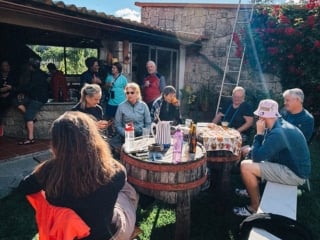
She gives you wine and snacks when you arrive, has cozy armchairs and garden seating, animals wandering around (dogs, cats, a rooster), and genuinely encourages everyone to sit together and talk.
The catch is she’s often fully booked. I called multiple times and kept getting told there was no room, but Dani connected with another German pilgrim who has been to Fernanda’s place 8 times. She gave us an inside tip for getting a room even though it was fully booked. We decided to try our luck with this tip and Fernanda gave us a bed!
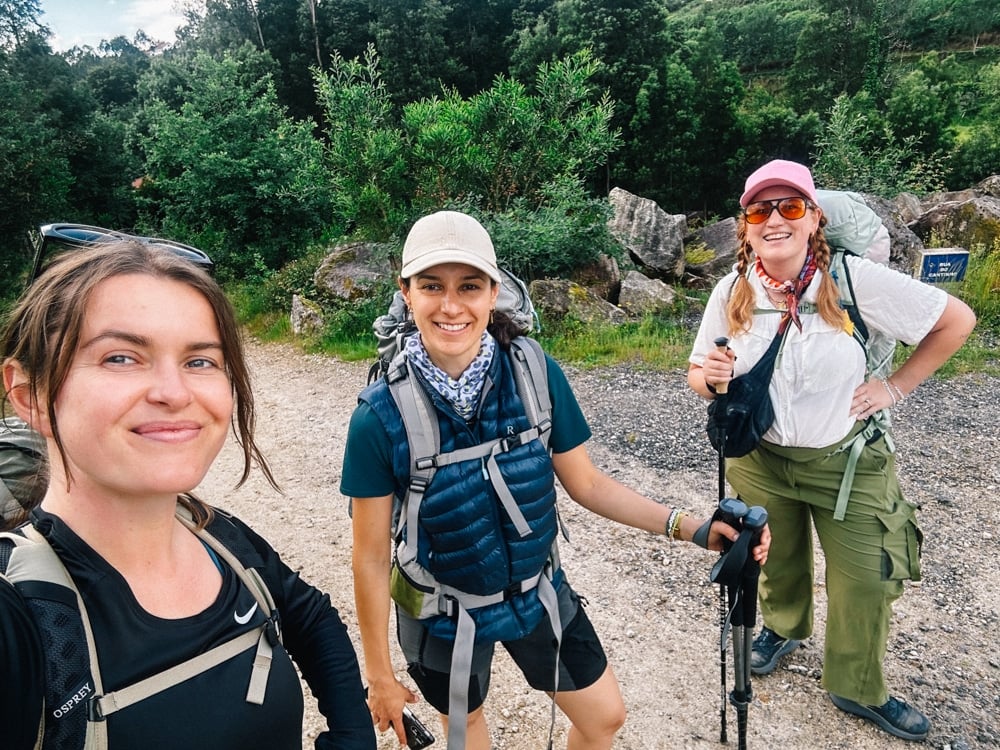
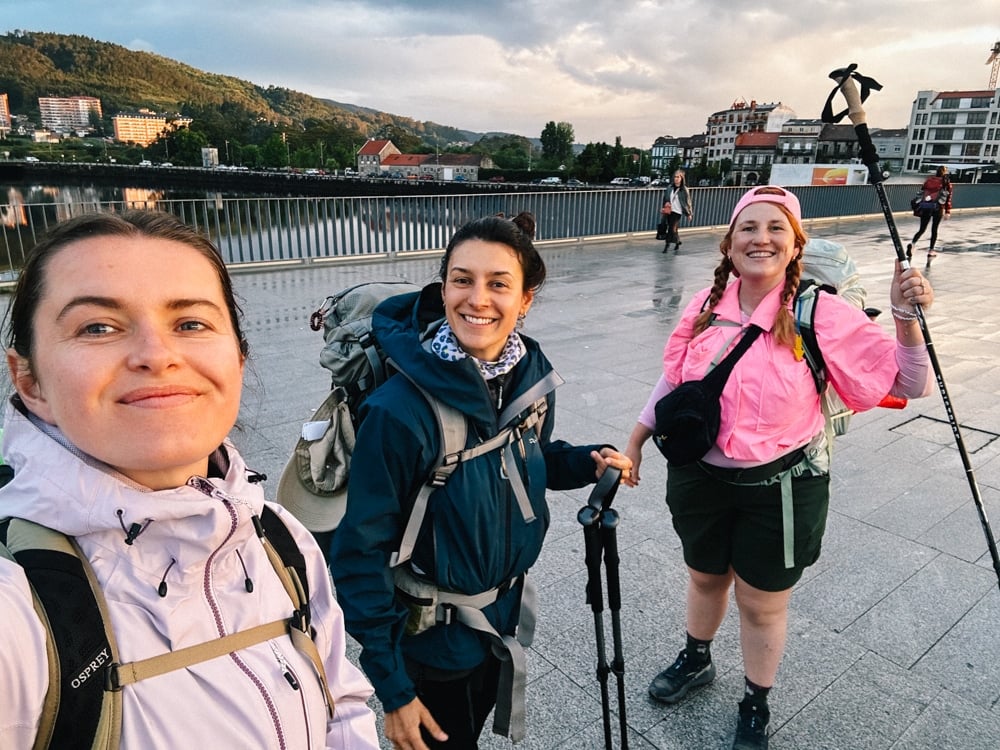
This is also where I met Maddie, who’s from London, and the three of us (Dani, Maddie, and I) clicked immediately and ended up walking the rest of the Camino together. After dinner, Fernanda brought out a guitar and eventually gave up on getting anyone to play it properly, put on ABBA instead, and we all danced in her kitchen. If you can get a bed here, go.
Pro-tip: Book in advance by calling her or emailing.


Day 6: Casa de Fernanda to Ponte de Lima
- Distance: approximately 11 km (7 miles)
- Route: Central route
- Where I stayed: Old Village Hostel, Ponte de Lima
A shorter, more relaxed day after the longer push to Casa de Fernanda, and one of the most purely enjoyable days of the whole trip. Me, Dani, and Maddie walked together for the first time as a group, it rained on and off all morning so we were constantly pulling our packs on and off, but the countryside was beautiful and we kept running into people we’d just spent the night with at Fernanda’s.
There weren’t many cafes on this stretch, which is a pattern you’ll notice on the central route in Portugal: some days are full of stops and some days you’re walking for hours without seeing anywhere to get food or use a bathroom. Always stock up on snacks and make sure you’ve got water before you set out each morning.
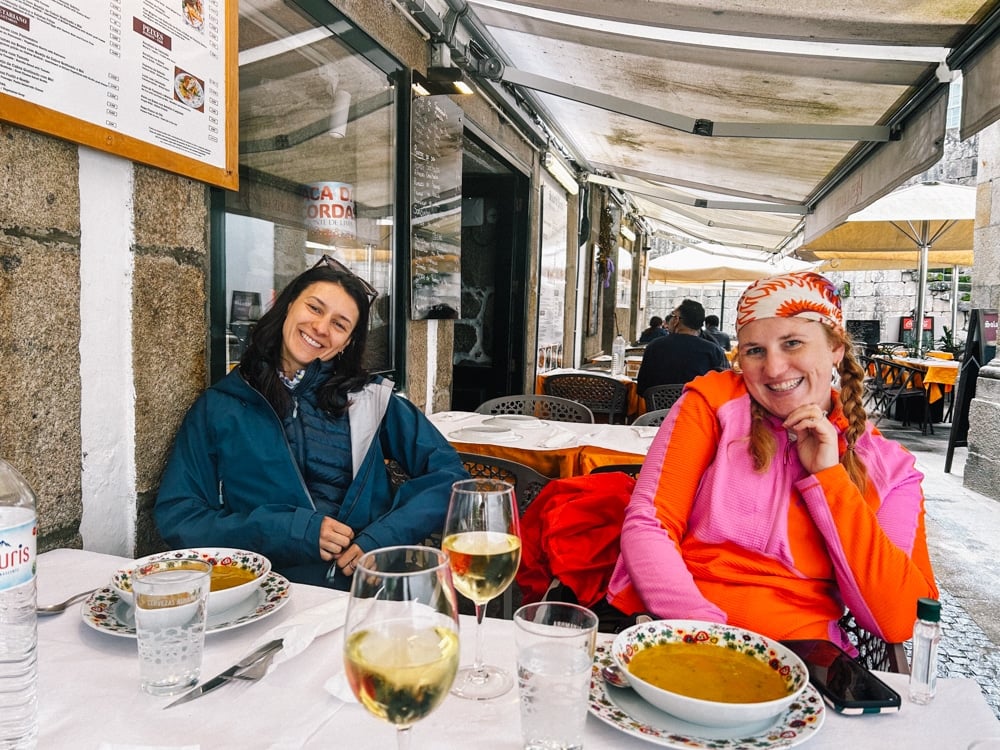
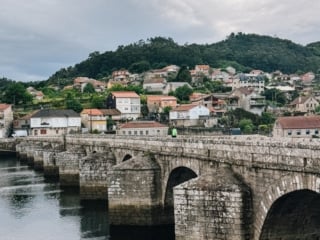
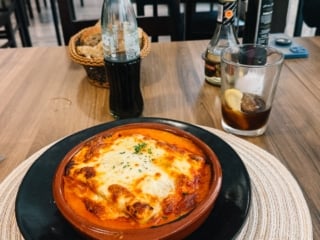
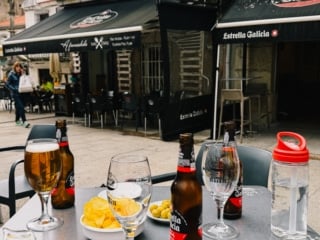
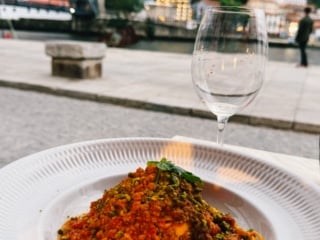
Ponte de Lima is one of the loveliest towns on the entire Camino and it had a festival going on that evening (of course it did). We had lunch at Solar da Picota Restaurante & Tapas, which served one of the best meals of my entire trip: sardines and wine for a 10 euro pilgrim’s menu, while a marching band paraded past us in the street.
After lunch we popped into the church where a ceremony was in full swing, walked around town a bit, picked up groceries, and I cooked pasta for everyone back at the hostel.
The Old Village Hostel is a little outside the town center but has a nice kitchen, clean dorms, and a good bathroom situation. It’s right by a pharmacy, which comes in handy more than you’d think. I’d stay there again, though if you want to be closer to the main square, look for something more central.


Day 7: Ponte de Lima to Rubiães (The Mountain Day)
- Distance: approximately 18 km (11 miles)
- Route: Central route
- Where I stayed: Pilgrims’ Nests (Ninhos), Rubiães
This was my hardest day on the Camino, and also one of the most fun, which is a combination I didn’t expect. The distance isn’t huge at 11 miles (18 km), but there’s approximately 600 meters (about 2,000 feet) of elevation gain and you’re climbing a mountain. Every time you think the uphill is done, there’s more.
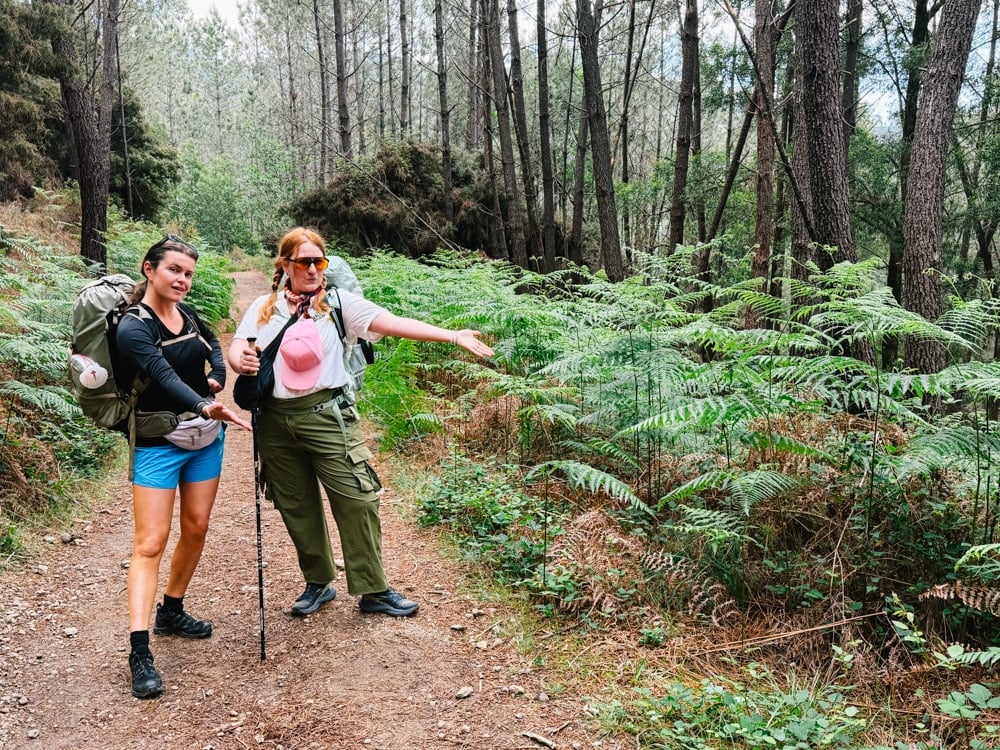
We passed vineyards and small villages on the way up, met trail angels selling cold coconut protein bars on the mountainside (which tasted like the greatest thing I’d ever eaten), and I met a very friendly donkey who yelled at us when we tried to walk away and had to be appeased with grass before he’d let us leave.
I was genuinely grateful to be walking this day with Dani and Maddie because I needed their motivation to keep going. There also weren’t many cafes, so we packed sandwiches to go from breakfast and ate them on the mountain, which felt very right.
The Pilgrims’ Nests (Ninhos) in Rubiães is where I’d tell every person doing this route to stay. You have to book via WhatsApp, the owner has a witchy cottage garden aesthetic with an old building and really comfortable beds, she provides blankets and a pilgrim’s dinner with wine and will accommodate dietary restrictions, and the whole place has this atmospheric charm that’s hard to describe but very easy to love.
This is also where we met Helena from the UK, who ended up joining our group for much of the rest of the trip. Highly recommend booking this one.


Day 8: Rubiães to Tui (Entering Spain)
- Distance: approximately 21 km (13 miles)
- Route: Central route, crossing into Spain
- Where I stayed: Pension La Corredera, Tui
A long day but a genuinely lovely one, mostly because we walked it with Michelle, who joined our group from the Ninhos the night before, and we stopped at seemingly every cafe along the way. It took us about six hours total but it didn’t feel like work because we were constantly talking, finding things to look at, and running into people we knew at each stop.
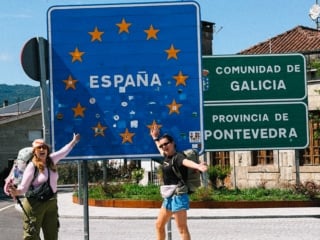
The big moment of this day is crossing the bridge from Valença, Portugal into Tui, Spain. You just walk across a bridge and that’s it, Portugal becomes Spain, and Spain is an hour ahead so you lose an hour of your day at the border.
We had lunch in Valença first and got salads, which felt like a revelation after days of croissants and ham and cheese sandwiches. Your body starts genuinely craving vegetables around day seven or eight.
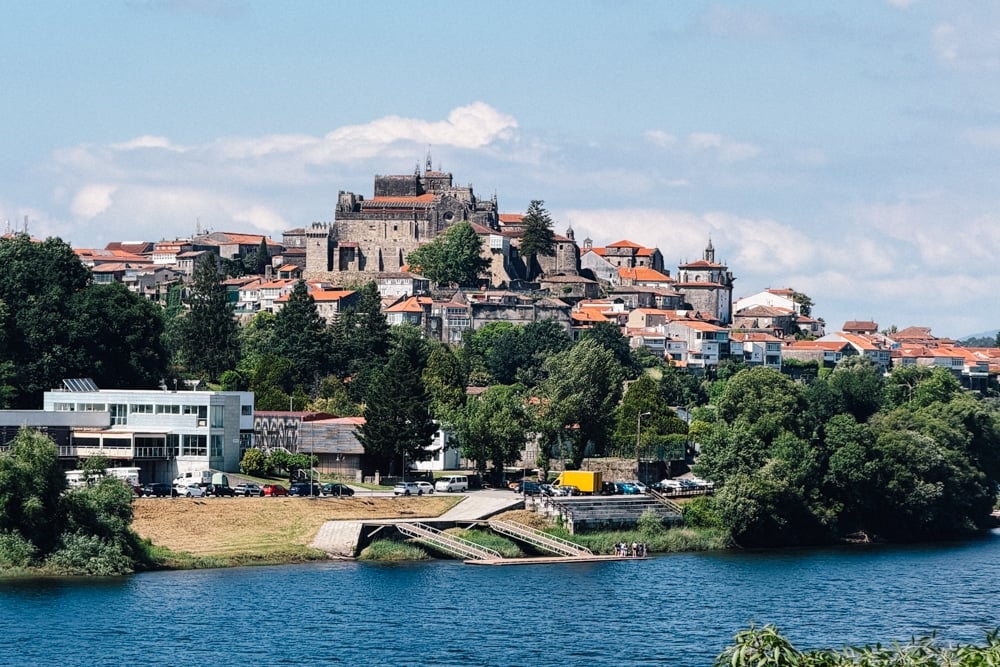
Tui is one of the most beautiful towns on the entire Portuguese Camino and I wish I’d spent more time there. It sits high on a hill with views in every direction, the cathedral is about 800 years old, and everywhere you look there are sweeping medieval streetscapes. If you need a rest day, take it here. It’s right at the halfway point and it’s worth it.
That evening we rented out a room in Pension La Corredera, a small guesthouse with a shared bathroom just for our group of three, and it felt like an incredible luxury after a week of large dorms.
We sat outside with wine and tapas at a restaurant in the square, met our friend Wyatt (an American firefighter from Northern California who works protecting the Redwoods), and soaked up what the forecast said would be our last guaranteed sunny evening for a while.
Do not leave Tui without getting the nun cookies. The Poor Clare’s Convent (Convento de las Clarisas) has only three nuns left, all in their 80s and 90s, and they sell homemade cookies shaped like little fish through a small window.
You ring a bell, wait for one of them to make her way downstairs, tell her how many boxes you want (10 euros each), pass your cash through the window, and she spins the tray around with your cookies. They’re the best cookies I’ve ever eaten. We accidentally ordered three boxes and genuinely don’t regret it.


Day 9: Tui to O Porriño
- Distance: approximately 16 km (10 miles)
- Route: Central route, Spain
- Where I stayed: Casucho da Peregrina Hostel, O Porriño
This is the day my plantar fasciitis really caught up with me. I’d been feeling foot pain building for a couple of days and Michelle helped me understand what was happening: I wasn’t stretching enough, morning or evening, and it had been accumulating. By about halfway through the day I was struggling to keep pace and slowing everyone down, and with about 5 km (2 miles) left I made the call to take an Uber to our hostel.
I want to be real about this because I felt guilty at the time: taking that Uber was the right decision. My friends helped me see that if I kept pushing on an injury and made it significantly worse, I might not be able to finish the Camino at all, and that would have been so much worse than riding those last two miles.
I got to the hostel, put arnica on my foot, elevated it for several hours, and rested for the remainder of the day. My foot swelled to about twice its normal size. From that day on I stretched every single morning and evening without exception and was able to keep walking.
This is your PSA: stretch before you start walking every morning and after you finish every afternoon. Your feet are your most important asset on the Camino and they need to be treated accordingly.
O Porriño doesn’t have a lot going on, which is fine because everyone in our group was feeling the emotional weight of being halfway through the trip by this point. Spirits were a little low. We had beers with Helena, picked up dinner at a grocery store, and went to bed early. Some days are like that.
Also do this today: once you’re checked in, book all your remaining accommodation for the rest of the trip. The Camino gets significantly more crowded from here because people start fresh in Tui and because the coastal route merges with the central route. If you wait, you will find things fully booked.


Day 10: O Porriño to Arcade (via Redondela)
- Distance: approximately 19 km (12 miles)
- Route: Central route, Spain
- Where I stayed: Albergue A Filla do Mar, Arcade
I felt better this day than I expected to, and I’m glad we pushed past Redondela to Arcade instead of stopping in the larger town. Redondela had another festival going on (at this point I’d stopped being surprised) and felt busy and hard to navigate.
There’s a small mountain between Redondela and Arcade with a fair bit of uphill, but doing it at the end of the day rather than first thing worked in our favor.
Arcade is a quieter town right on the river, and the hostel we found there was a large dorm with about ten beds but clean bathrooms and a dinner service. We had pasta and rice, met some new people, and it was a pleasant low-key evening after a long day.


Day 11: Arcade to Pontevedra
- Distance: approximately 16 km (10 miles)
- Route: Central route, Spain
- Where I stayed: Albergue Nacama Hostel, Pontevedra
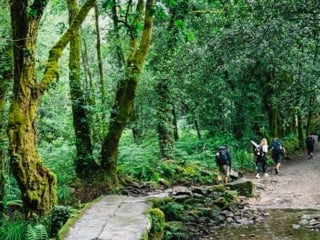
One of my favorite walking days of the whole trip. You cross a river out of Arcade, spend a long stretch in a beautiful forest with a river running alongside the trail, pass vineyards that look exactly like what you imagined when you signed up for this, and find a random pop-up van cafe in the middle of the woods that somehow has great empanadas and perfect coffee.
This is also the day we started doing the thing that ended up being our ideal group dynamic for the rest of the trip: we’d walk together for the first hour or so in the morning, then part ways and go at our own paces (Maddie walks faster than me), and meet up again at cafes or at our accommodation in the evenings.
It sounds counterintuitive to separate from your group but it was genuinely the best of both worlds: solo time to think and listen to audiobooks, and then friends for dinner every night.
I also stopped at the Chapel de Santa Marta, which is right on the Camino Português and was built in 1617. It offers one of the oldest stamps on the entire route, and I sat there quietly for a while even though I’m not religious. There’s something about those old stones on this old path that makes you want to pause.
The forest trail before Pontevedra is beautiful but can be very muddy and flooded after rain, and I watched a woman face-plant right in front of me on a flooded section of path. Have good grip on your trail runners and use your hiking poles through this stretch.
Pontevedra is a much larger city than anything we’d been staying in, with a proper downtown full of restaurants and tapas bars. The Nacama Hostel is huge (about 40 beds) but separated into smaller areas so it felt less chaotic than expected. We ended up with a nice corner just for the three of us near a window.


Day 12: Pontevedra to Caldas de Reis
- Distance: approximately 21 km (13 miles)
- Route: Central route, Spain
- Where I stayed: Pensión Augas Quentes, Caldas de Reis
A long day with some elevation and rain on and off, but our bodies were noticeably stronger by this point. We’d originally thought this stage would take about seven hours and we did it in four and a half, which tells you everything about how much your body adapts over 12 days of walking.
There’s a cafe about two and a half hours into the walk, in the middle of what feels like nowhere, and on the day I walked through it seemed like every single pilgrim on the trail had converged there at the same moment. It was packed and loud and so fun, a real reminder of how many people you’ve been walking alongside without realizing it.
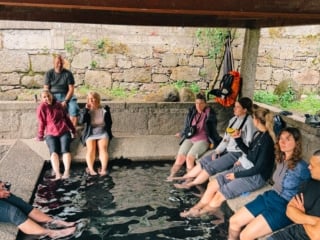
The accommodation in Caldas de Reis wasn’t great (we shared one bathroom among five guests, which was a constant bottleneck), but the town itself was worth it because of the Lavadoiro Termal pools. These are public hot spring pools right in town where you can soak your feet, and I cannot overstate how good this feels on day 12 of a long walk.
We sat there for about 30 minutes, talked to other pilgrims, and felt restored. Wear your sandals to the pools rather than your trail runners because you don’t want to put socks back on wet feet.
That evening we bought groceries, brought them back to our room, popped popcorn, got face masks, and watched The Parent Trap on my Apple iPad, which Dani hadn’t seen since she was a kid. It felt like a sleepover and was one of my favorite evenings of the whole trip.


Day 13: Caldas de Reis to A Escravitude
- Distance: approximately 25 km (15-16 miles)
- Route: Central route, Spain
- Where I stayed: O Lagar de Jesus, A Escravitude
Our longest day, and by this point in the trip we were strong enough that it took us about four and a half hours despite the distance. Most pilgrims stop in Padrón, which is a major town with lots of options, but Maddie had found O Lagar de Jesus slightly further along and it was known for its pilgrim dinners and beautiful old stone property.
We decided to push past Padrón to get there, which also made our final day shorter, and I’d make the same call again.
There’s a great cafe stop in a little town called San Miguel along the way, the Cafe Bar San Miguel, with good empanadas, lots of seating, and a clean bathroom. Worth knowing about because it’s a long stretch.
My knee started giving me real trouble on this day, particularly after some of the downhill sections, and I was very glad I’d packed a knee brace. I pulled it on and it carried me through the rest of the day and the final day too. Pack one. You can buy them at pharmacies along the route but when your knee goes out on a downhill, you want it in your bag immediately.
O Lagar de Jesus turned out to be a gorgeous property with old wood beams, stone walls, good dorms with blankets and towels, and three bathrooms for the whole place. The only thing we didn’t expect is that we were the only guests booked in, so the big community pilgrim dinner we’d imagined didn’t materialize.
The dinner was simple and the beer was good, and we set up my iPad in the dorm and watched Eurovision semi-finals from our beds, which felt like the most perfectly chaotic way to spend the second-to-last night of a pilgrimage.
If you’re walking in summer, I’d be more confident recommending this place because the owner told me it fills up fully most nights in peak season. In early May it was just us, which was both peaceful and slightly eerie.


Day 14: A Escravitude to Santiago de Compostela
- Distance: approximately 19 km (12 miles)
- Route: Central route, Spain
- Where I stayed: San Francisco Hotel Monumento
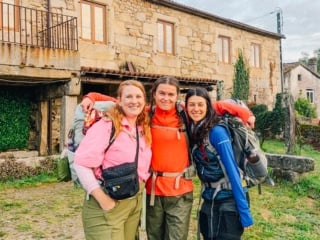
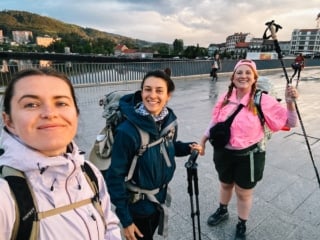
The last day. We were up at 6am, took photos in front of the albergue, and walked out into a perfect sunny morning together. The first couple of miles felt romantic in the way that only the end of something can: tiny sleepy villages, vineyards, almost no one else on the trail yet, golden light.
We walked together for the first stretch and then gradually did our own thing, which felt right.
About an hour before Santiago, someone was playing piano in the forest: full classical pieces, Mozart and other iconic pieces, loud enough to hear from far away.
I walked toward the music for about 10 minutes before I found the man playing, and by the time I reached him I was already tearing up a little because you know you’re almost there and this beautiful music is coming through the trees. I gave him a euro and kept walking.
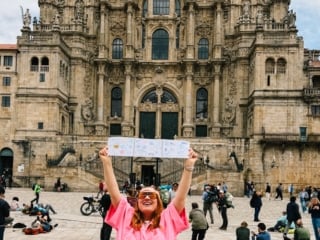
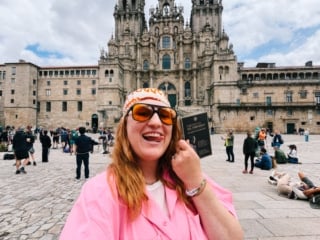
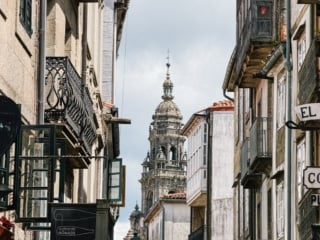
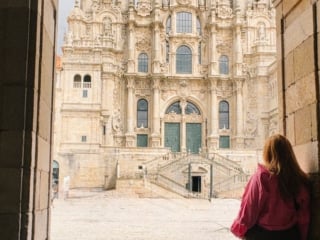
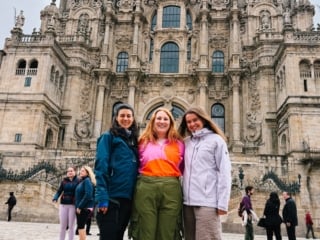
Then you go over a hill and see Santiago in the distance with the cathedral towers visible, and you go slightly giddy, and then you’re walking through the old city streets, and then the cathedral pokes up between the buildings, and then you’re in the plaza and you’re done.
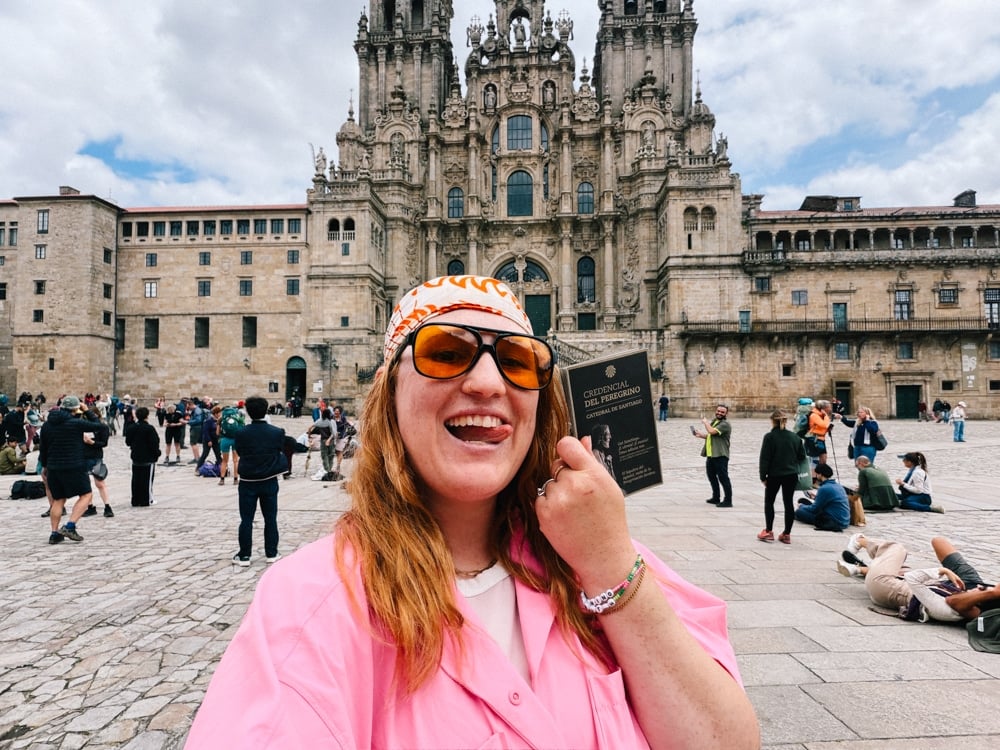
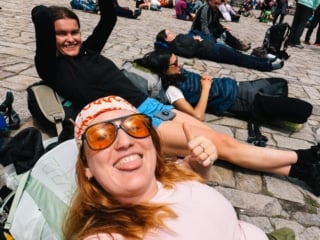
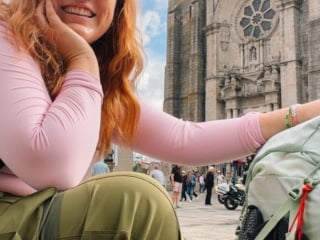
I cannot adequately describe what it feels like to walk into that plaza. There were hundreds of pilgrims sitting on the ground, leaning against their packs, watching everyone come in, and every few minutes there’d be a huge cheer as someone finished and their group ran to meet them. My friends were already there.
We hugged. Beata, the German woman who’d walked the Camino eight times and had survived breast cancer twice, found us and bought everyone a beer. We sat in the sunshine and watched people arrive for hours.
Plan to spend several hours in the plaza. Everyone told me this beforehand and I thought they were exaggerating. They were not.
After the plaza, we went to the pilgrim’s office to collect our Compostela certificates, which I ran into both of my German trail friends doing at exactly the same time, because of course I did.
That evening we had wine at a Tapas bar, and then late night drinks at Pub Momo, a popular pilgrims’ bar. I booked a room at the fancy San Francisco Hotel Monumento, which is an old monastery converted into luxury hotel and I felt like a princess having my own queen bed to myself.
Where to Stay in Santiago de Compostela
I treated myself to the San Francisco Monumento Hotel for my nights in Santiago, which is inside an old monastery right next to the Convento de San Francisco. It’s a block from the cathedral, has free breakfast in a beautiful vaulted dining room, a pool, and a gym, and after two weeks of albergue bunks it felt wonderful.
If you want a hostel, Maddie stayed at the Last Stamp Hostel and liked it.


What to Do in Santiago de Compostela After You Finish
Give yourself at least two nights in Santiago. The day you arrive you’re going to want to sit in the plaza for a long time, collect your certificate, find a good dinner, and go to bed. The second day is for actually seeing the city.
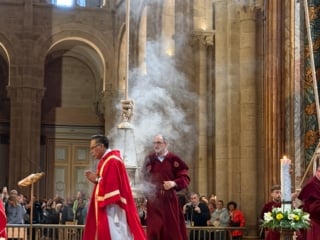
Attend a mass at the cathedral. I’m not religious but it felt like a meaningful way to close out the trip given that the entire Camino exists because of this cathedral. On the night I attended, they brought out the Botafumeiro, the giant incense burner that swings across the nave on a pulley system, which doesn’t happen every service, so I felt genuinely lucky.
For drinks and dinner, Bar La Cueva is a local wine bar with outdoor seating, cheap bottles of wine, and good food. It’s the kind of place locals actually go to, and I ate there twice. Pub Momo is the classic pilgrim bar where everyone ends up after finishing, it has a college-bar energy and stays open late, and you will see approximately everyone you’ve walked with at some point in the evening.
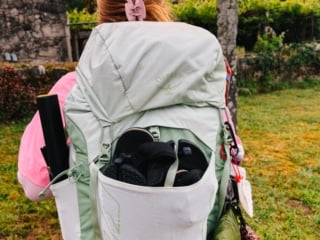
Book a massage at Masajes Belmu before you leave Santiago. It’s 50 euros for 60 minutes, you can book fairly last minute with a 10 euro deposit, and after 160 miles on your feet it is completely worth it. My masseuse commented that I had very little tension in my back for a pilgrim, which she credited to my Osprey Tempest 33 backpack, which is genuinely the best backpack I’ve ever used.
Getting Back to Porto from Santiago
I took the ALSA bus from Santiago back to Porto, which cost about 40 euros, takes approximately four hours, and is a perfectly comfortable ride. Book a seat near the front for better views.
The bus passes through many of the towns you walked through, and in some places you can actually see the Camino path and pilgrims still walking it, which is a surreal and emotional experience in equal measure.
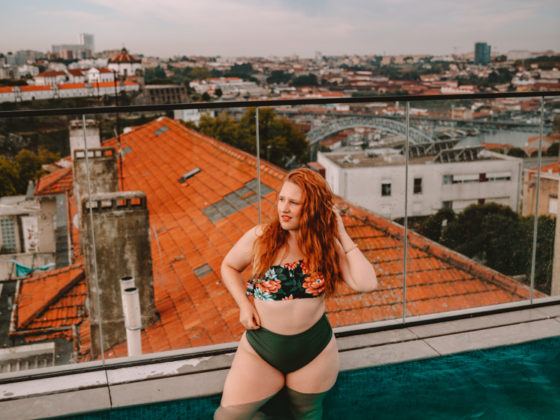
I arrived in Porto around 3pm and spent one more night there before flying home, which I’d recommend. It’s a nice way to decompress slowly rather than going straight from the Camino finish to the airport.I stayed at this beautiful Porto Airbnb with stunning views of the city from the patio.
Camino de Santiago Portugal Tips and Practical Info
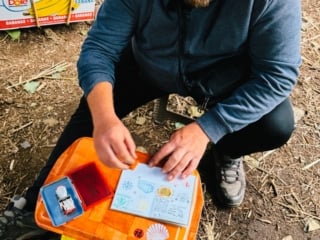
Stamps: you need one stamp per day in Portugal, and two per day once you’re within the last 100 km in Spain (roughly from the Tui area onward). Some places date-stamp for you and some don’t, so keep track. Without enough stamps you won’t receive your Compostela in Santiago. Keep your credential in a waterproof pouch or a Ziploc bag because if it gets soaked and torn, you’ll regret it.
Stretching: every morning before you start walking, every evening after you stop after waling the Camino trail. This is the single tip I’d go back and give myself on day one. Plantar fasciitis and knee issues are the most common problems pilgrims develop, and both are significantly less likely if you’re stretching consistently.
Electrolytes: start every morning with an electrolyte packet mixed into your water. I brought the Absorption Company Restore Electrolytes in mango lemonade and the Time Beam Bounce Mode Healthy Pixie, and on the days I used them versus the days I didn’t, the difference in how I felt was noticeable. At lunch, if you can find a Coke or a Powerade, get one.
The yellow arrows: they’re everywhere, and you can navigate the entire Camino just by following them without any app. Once you start looking for them you’ll never miss one. We made a joke out of “little arrows, in we trust” and it held true every single day. Before apps and Google maps, people walked by following the arrows.
Starting in Porto vs. Tui: Tui is the last valid starting point for the Compostela certificate, and I saw a lot of people beginning there. I think they miss the best part of the Camino. Portugal is quieter, more beautiful in my opinion, and it’s where you build your Camino family because you’re walking with the same smaller group of people day after day. By the time you cross into Spain you’re in a good rhythm and the crowds are manageable. Start in Porto.
The Variante Espiritual: this is a beautiful alternate finishing route that branches off from the main Camino Portugués near Pontevedra and goes up through the coast and by boat before rejoining the route near Padrón. I didn’t do it on this trip but it’s on my list. Several people I walked with did it and loved it, particularly the boat section. It dates back to the middle ages.
Tour groups: I saw a lot of pilgrims walking with tour groups who had a bus following them and drove to lunch some days. I’ll be honest: it didn’t feel like the Camino to me. The whole point, at least the way I experienced it, is the walking, the people you meet on the trail, the sense that you’re earning every kilometer. Walk it. You’ll understand why when you get to Santiago.
Camino de Santiago Packing: The Short Version
I have a full Camino de Santiago packing list with every item I brought linked and reviewed, but the non-negotiables in short:
- trail runners without Gore-Tex (I wore the Salomon Genesis)
- Darn Tough hiking socks (worth every penny of the $25 price tag)
- the Osprey Tempest 33 backpack
- a bright-colored rain poncho
- hiking poles
- blister bandages
- ibuprofen
- Vaseline for your feet every night
- electrolytes
FAQ About the Camino de Santiago Portugal
How long does it take to walk the Camino de Santiago from Porto?
Most people complete the Camino Portugués from Porto to Santiago in 12 to 16 days. I did it in 14 days, covering about 160 miles (257 km). Your pace, rest days, and daily mileage all factor in, but 14 to 15 days is a comfortable target for most walkers.
How do I buy my Camino scallop shell and credential?
You can order your shell and credential/passport online ahead of time, or simply purchase at the Pilgrim’s office in Porto near the cathedral before you start. You need a credential in order to collect stamps and get your certificate at the end. You don’t need a shell but I highly encourage you buy one as it marks you as a pilgirm.
What is the best starting point for the Camino de Santiago Portugal?
Porto is the best starting point for the Camino de Santiago Portugal way. It gives you the full Portuguese experience, more time to build your trail community, and a gentler introduction to the route before the terrain gets more demanding closer to Santiago. Lisbon is an option for a longer walk of about 600 km (373 miles).
Tui, Spain is the last valid starting point for earning your Compostela, but you miss the Portuguese stretch entirely.
What is the difference between the Camino Portugués Central route and Coastal route?
The Camino de Santiago Portugal coastal route stages run along the Atlantic coast with flat boardwalks, ocean views, more facilities, and less elevation. The central route goes inland through northern Portugal with vineyards, medieval villages, forests, and some significant climbing.
Both routes are well worth doing, and you can combine them by starting on the coastal and switching to the central, which is exactly what I did.
Is the Camino de Santiago Portugal difficult?
It’s challenging but very doable for most people who prepare reasonably well. The central route has one major mountain day with significant elevation gain, and plantar fasciitis and knee issues are common if you don’t stretch consistently and wear the right footwear.
Your body adapts more than you’d expect: stages that feel hard on day three feel manageable by day ten.
The Camino Portuguese is not as hard as the Camino Frances, which takes about 35 takes, or the Camino Norte which is supposed to be the hardest of the Camino routes.
Should I Do The Spiritual Variant?
The Camino Spiritual Variant is an alternative route from Pontevedra to Padrón which takes about 2-3 extra days of walking. I chose not to do this, but many of the people I walked with did it.
You need to make sure you have enough time to complete this and have pre-booked your hotels as there are less facilities on this route. My friend Michelle did it and said it was her favorite part of the whole Camino, so it’s worth it if you have the time and energy.
Do I need to speak Portuguese or Spanish for the Camino?
You don’t need to speak either language to walk the Camino, though a few basic words in Portuguese and Spanish go a long way especially when you cross into Northern Spain. Most albergue owners and cafe staff along the popular route are very accustomed to pilgrims who only speak English.
What is the Variante Espiritual on the Camino Portugués?
The Variante Espiritual (Spiritual Variant) is an alternate route that branches off the main Camino Portugués near Pontevedra, travels up through the Galician coast, and includes a boat crossing before rejoining the main route near Padrón for the final approach to Santiago. It adds some distance but is considered one of the most beautiful sections of any Camino route.
Popular routes like the French Way don’t include this variant, which makes the Portugal route unique.
Can I walk the Camino de Santiago Portugal alone?
Absolutely, and many people do. The trail is extremely well marked with yellow arrows throughout, and the Camino community is one of the most welcoming I’ve ever encountered. In my experience, you won’t stay alone for long because the Camino has a way of building friendships faster than almost any other travel experience I know of.
Grab WhatsApp numbers, say yes to invitations, and your Camino family will find you.
If you’re planning your Camino de Santiago Portugal walk, drop a comment below. I want to know which route you’re considering, how many days you’re planning for, and what questions you still have. Buen Camino!