I’ve been hearing about Fujifilm cameras for YEARS. Like, years and years of photographers I respect telling me I needed to try one. And I kept putting it off because I’m a Canon girl through and through and I didn’t think anything was going to change that.
I rented the Fujifilm X100VI through a camera rental service, brought it to Sacramento for a trip, and then spent extra days shooting all around San Francisco with it. Five days total. I tested it hard, complained about it, figured it out, and came away genuinely converted in ways I did not expect.
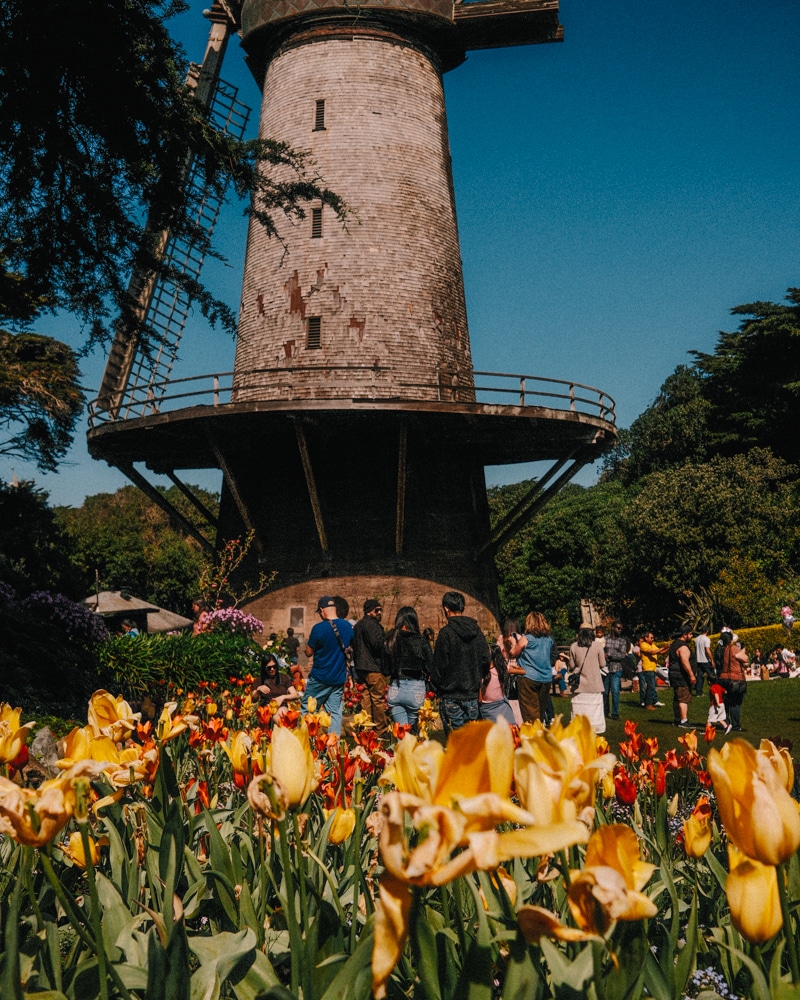
All the foggy San Francisco photos in this post? Shot entirely on the X100VI. If you like what you’re seeing, keep reading.


My Photography Background (So You Know Where I’m Coming From)
I want to give you some context because I think it matters for this review. I’ve been a photographer since I was 14. Both of my grandparents were photographers.
I shot weddings professionally and senior portraits. Now I travel the world shooting content for Whimsy Soul and contributing to Yahoo!. I take all of my own photos (except the ones my husband Robin takes, and I taught him everything he knows, so.)
My main camera is a Canon 6D. It’s my ride or die. I love it so much and I will never fully replace it. But what I don’t love about my Canon is the weight. When you’re traveling solo and lugging gear plus a bag plus everything else, a big DSLR is a lot. So I’ve been on the hunt for a lighter camera that still gives me something my iPhone just can’t.
Here’s my honest Fujifilm X100VI review, from someone who has been shooting professionally for 20+ years and is not easily impressed.
What Is the Fujifilm X100VI?
The X100VI is the sixth generation of Fujifilm’s iconic X100 line. It’s a compact, fixed-lens camera with a 40.2MP sensor, built-in body image stabilization, and a hybrid viewfinder.
The fixed focal length lens is 23mm (equivalent to 35mm full frame), which makes it a great everyday carry and street photography camera.

The thing that makes Fujifilm cameras different from anything else on the market is the film simulation system. More on that in a minute because it’s honestly the whole reason people fall in love with these cameras.
It comes in silver and black. I had the silver. It’s beautiful. Every time I picked it up I felt like a cool film photographer from a different era, haha.
What It’s Like to Shoot With the Fujifilm X100VI
I have a lot of thoughts on this, so let me break it down by what actually matters when you’re out there shooting with it. My first few days with this camera did not go the way I thought they would.
The Learning Curve Is Real
I’m gonna be honest with you: I struggled at first. And I say that as someone who has been shooting for 20+ years and knows cameras. The X100VI does not work the way a Canon or a Nikon works, and it is not intuitive out of the box.
The dials are analog-style on the top plate, which looks gorgeous but means you have to relearn where everything lives.
Shutter speed, aperture, ISO are all physical dials, which is actually wonderful once you get used to it, but for the first few days I kept looking for how to adjust the exposure.


I watched a lot of YouTube videos. A LOT. I spent about four days feeling genuinely lost, and by day five I finally started to feel comfortable. So if you pick this up and immediately feel confused, that’s normal. Give it time.
Fujifilm Film Simulations and Recipes
Okay, this is the thing. This is why people are obsessed with Fuji cameras, and once I understood it I completely got the hype.
On my Canon, I shoot in RAW and then pull the files into Lightroom where I apply my own presets. It’s a whole editing workflow. With the X100VI, Fujifilm has a different philosophy. The camera has built-in film simulations that are essentially pre-programmed color profiles inspired by actual film stocks.
You can then take those simulations and build “recipes” by adjusting grain, color chrome, shadow and highlight tones, and other settings directly inside the camera.
What this means in practice: you set up your recipe, you shoot, and when you look at the photo on the back of the camera it already looks like a beautiful, nostalgic, vintage-film photo. No editing required. It’s incredible.

The catch is that you have to export your photos as JPEGs, not RAW files. If you shoot RAW, the recipe doesn’t get baked in and you have to reapply everything in Lightroom, which defeats the whole purpose in my opinion. So if you’re used to a RAW workflow like I am, that’s a mental shift.
(Side note: you can totally still apply these recipes in Lightroom but that takes extra time and for me personally I want these to just “out of the box” images if that makes sense)
I spent a lot of time playing around with different recipes and I really loved the Osan Bilgi Summer Chrome recipe. Highly recommend starting there. You can also search online for recipe ideas because there’s a huge community of Fuji shooters sharing their setups. Play around. That’s part of the fun.
Image Quality on the 40MP Sensor
The 40.2MP sensor in the X100VI is sharp. Really sharp. I did a direct comparison test where I took photos at the same spots with both the Fuji and my iPhone. In terms of pure sharpness and detail, my iPhone held its own better than I expected.
But the Fuji photos had something the iPhone photos just didn’t. That warm, nostalgic quality from the film simulations. The specific rendering of color. The way the image feels like a photograph and not just a snapshot. It’s harder to quantify but you feel it immediately when you look at them side by side. I came back from that test a Fujifilm convert.


The fixed lens does mean no zoom, which took some getting used to. You’re shooting at one focal length, so you move your feet. For street photography and travel it’s actually kind of freeing once you stop fighting it.
Low light performance is solid too. The body image stabilization offers up to 6 stops of compensation, which is a lot for a camera this compact. I noticed a big difference shooting in shaded areas and indoors compared to what I’d expect from something this small.
Fujifilm X100VI Hybrid Viewfinder
The hybrid viewfinder is one of my favorite physical features on this camera. You can switch between an electronic viewfinder (EVF) that shows exactly what the sensor sees, and an optical viewfinder (OVF) that shows a slightly wider view including what’s just outside the frame.
For street photography, especially, the OVF is really useful because you can anticipate what’s about to enter the frame.


The Battery Life Problem
Real talk: the battery life on the X100VI drove me absolutely crazy. I left for a walk on Ocean Beach in San Francisco with a fully charged battery and it was dead in 40 minutes. FORTY MINUTES. I hadn’t even been shooting the whole time.
I think I know what happened though. The X100VI connects to your phone via Bluetooth so you can transfer photos wirelessly through the Fujifilm XApp.
When that feature is enabled, the camera is constantly searching for a Bluetooth connection even when you’re not actively using it, and that drains the battery incredibly fast. I had that enabled the whole time without realizing the impact.


My plan is to rent the camera again (I’m taking it on the Camino de Santiago in May) and test it with Bluetooth turned off to see if that fixes it. If you’re getting frustrating battery drain, try that first.
Fujifilm X100VI vs X100V
A lot of people upgrading from the X100V are wondering if the VI is worth it, and the answer depends on how you shoot.
The most significant hardware upgrade is the sensor. The X100VI jumps from 26.1MP to 40.2MP, which means a lot more flexibility when it comes to cropping in post without losing quality.
The X100VI also adds body image stabilization, which the X100V didn’t have at all. This helps your photos come out sharp even when your hands aren’t perfectly steady. If you shoot a lot in low light or indoors, that matters more than you’d think.
If you’re on the X100V and happy, there’s no urgent reason to upgrade. But if better stabilization or higher resolution for cropping sounds like it would solve a real problem in your shooting, the VI is worth considering.


Is the Fujifilm X100VI Worth It for Travel Photography?
Yes, with some conditions attached. And I say that as someone who came into this rental as a committed Canon loyalist and is now actively planning her next rental because she wants this camera on the Camino de Santiago.
If you’re a photographer who wants beautiful, film-inspired images without dragging a full kit through an airport, this camera was basically made for you. The compact body, the recipe system that does the editing work for you, it all adds up to something that changes how you shoot on the road. I found myself slowing down, being more intentional with each frame, which honestly made the photos better.
That said, if you’re expecting to unbox it and be shooting confidently the same afternoon, you’re going to have a bad time. The learning curve is real and it takes patience. And if shooting at one fixed focal length sounds like a creative straitjacket to you, that frustration won’t go away. Some photographers need zoom and there’s zero shame in that.
Where to Buy the Fujifilm X100VI
You can buy the Fujifilm X100VI directly from Fujifilm or from Amazon. It’s an investment, not gonna lie.
If you want to test it before committing, I highly recommend renting it first through a camera rental service the way I did. Five days with a camera tells you way more than any review can.
I’m not replacing my Canon. But for travel photography when you want something lighter than a full kit and more interesting than your phone, the X100VI has earned a permanent spot in my rotation.
Fujifilm X100VI FAQs
Is the Fujifilm X100VI good for beginners?
It can be, but be ready for a learning curve. The analog dial system and film simulation recipe workflow are different from any other camera you’ve used. Watch YouTube videos, be patient with yourself, and plan on at least a few days of practice before you’re shooting comfortably.
Do you have to shoot JPEG on the Fujifilm X100VI?
You don’t have to, but if you want to use film simulation recipes the way they’re intended you should shoot JPEG. If you shoot RAW, the recipe isn’t baked into the file and you’ll have to reapply everything in editing software. For most people who want that Fuji look without heavy editing, JPEG is the move.


What is the battery life like on the Fujifilm X100VI?
Shorter than you want it to be. The battery drains fast, especially if Bluetooth is enabled for the Fujifilm XApp. Turn off wireless features when you’re not actively transferring photos and you’ll see a meaningful improvement. Carrying a spare battery is also a smart move.
What’s the best Fujifilm X100VI film simulation recipe to start with?
I really loved the Summer Chrome recipe. You can find it at osan-bilgi.com along with a bunch of other options. There are also tons of recipe communities online where Fuji shooters share what they’re using. Start with one you like the look of and tweak from there.
Is the Fujifilm X100VI fixed lens a problem?
It depends on how you shoot. The fixed 23mm lens (35mm equivalent) is great for street photography, travel, and everyday shooting. You have to move your feet instead of zooming. Some photographers love the creative constraint. Others find it limiting. Rent it and spend a day with it before deciding it’s a dealbreaker.


How does the Fujifilm X100VI compare to shooting with an iPhone?
Technically, my iPhone kept up with the X100VI in sharpness. But the Fuji produces images with a warmth and film-like quality that a phone just doesn’t replicate.
If you love that nostalgic, analog-feeling image quality, there’s no comparison. The Fuji wins on feel every time.
If the Camino de Santiago photos come back looking half as good as what I got during this rental, I’ll be a very happy camper. I’ll update this post after the trip with more real-world shots and any new thoughts, so check back.


Drop a comment below if you have questions and I’m happy to help you figure out if it’s the right camera for you!