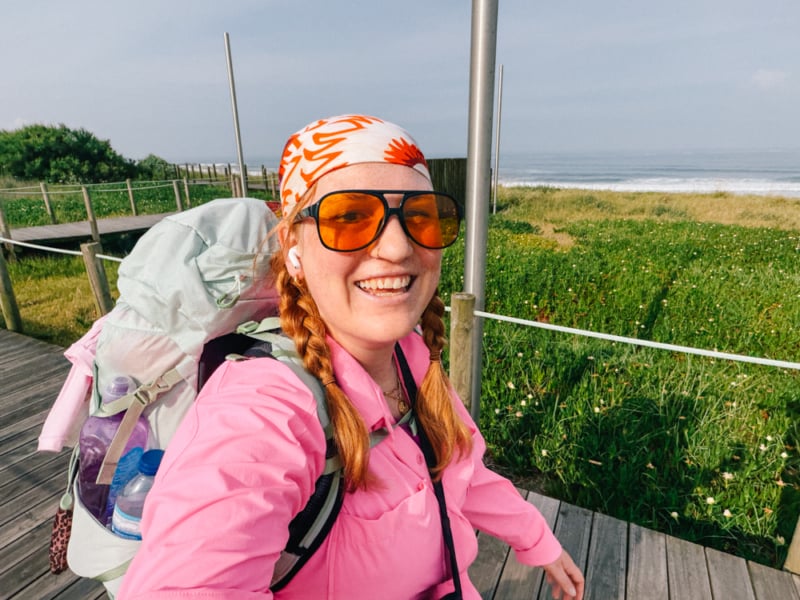
People ask me about the best backpack for the Camino de Santiago more than almost anything else from my trip, and I get why.
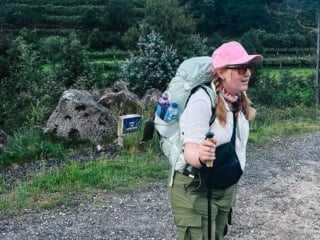
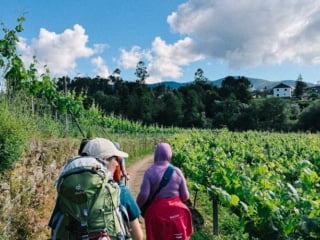
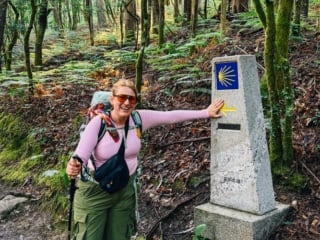
You’re about to carry everything you own on your back for two to five weeks, and getting it wrong means blisters and a wrecked back before you’ve even hit day three. I walked the Camino Português in May 2026, about 160 miles (257 km) from Porto to Santiago, in an Osprey Tempest 33, and I’m going to tell you exactly why this hiking pack worked, where it didn’t, and which size you actually need depending on your route and the season you’re walking in.
This isn’t a roundup of ten different Camino backpacks. I’m not going to pretend I tested fifteen packs side by side on the trail, because I didn’t. I tested one Camino pack, on my own back, for 160 miles of rain, mud, mountains, and one extremely memorable post-Camino massage.
So this is a real review of the Osprey Tempest 33, plus my honest take on when you’d want the Osprey Tempest Pro 30 or the Osprey Kyte 38 instead. Osprey packs come up again and again when pilgrims compare gear notes on the trail, and once you see why, you’ll get it too.
My Quick Answer on the Best Backpack for the Camino de Santiago
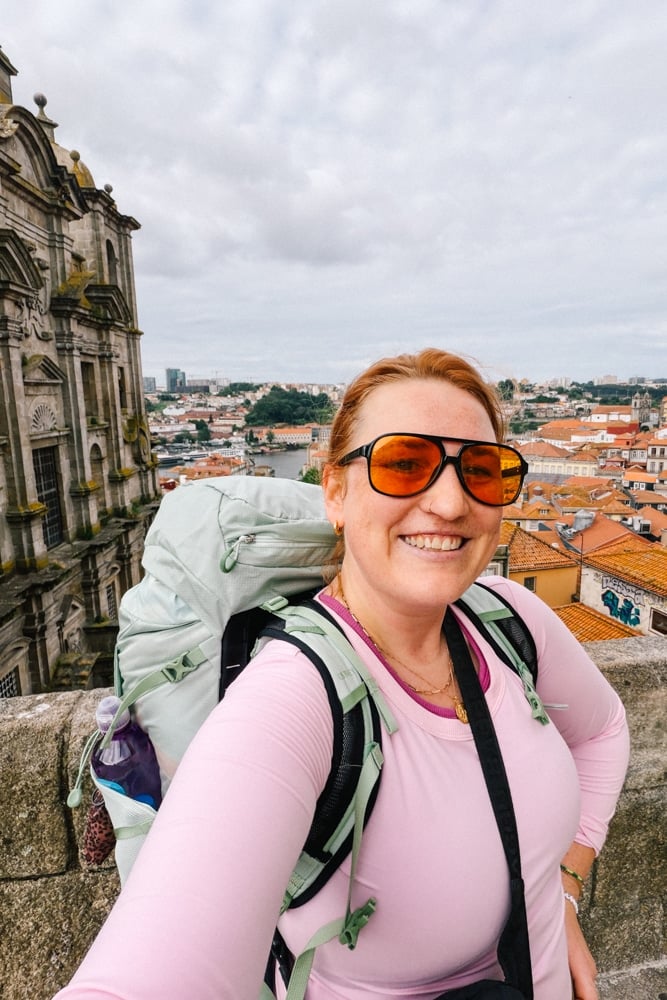
If you want the short version: get the Osprey Tempest 33. It’s $205, and it’s the size sweet spot for almost everyone walking the Camino Português or Camino Francés, in any season except deep winter.
If you’re an actual minimalist packer or you’re only doing a shorter stretch (like the last 100 km from Tui), size down to the Osprey Tempest Pro 30, which runs $250. If you’re walking in winter and need room for bulkier layers, size up to the Osprey Kyte 38, which runs $220.
Whatever liter pack you choose, don’t go smaller than 30L or bigger than 38L for this Santiago backpack. I’ll explain why below.
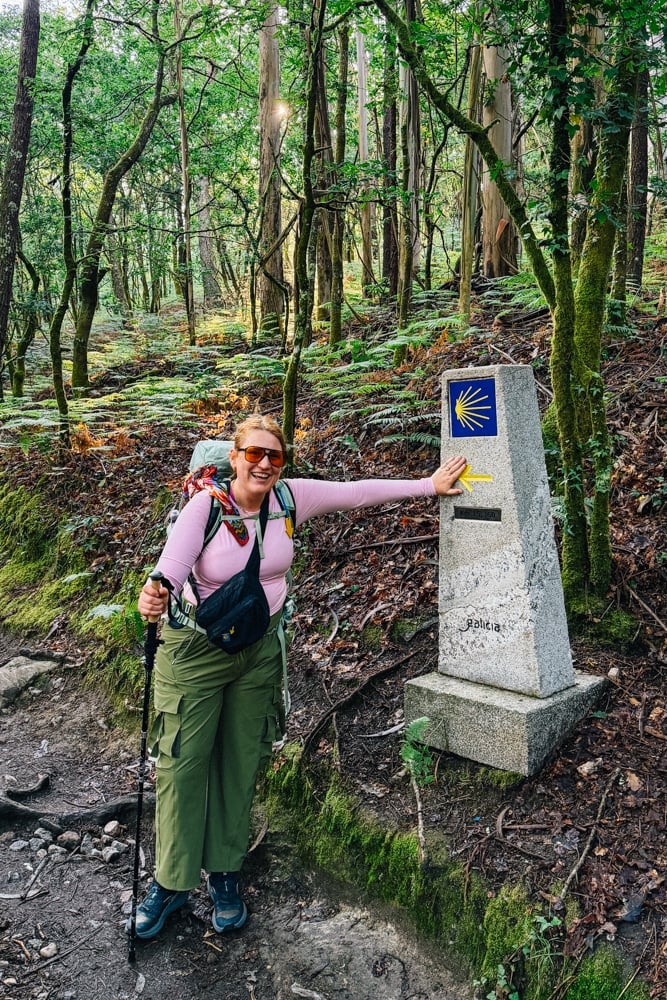
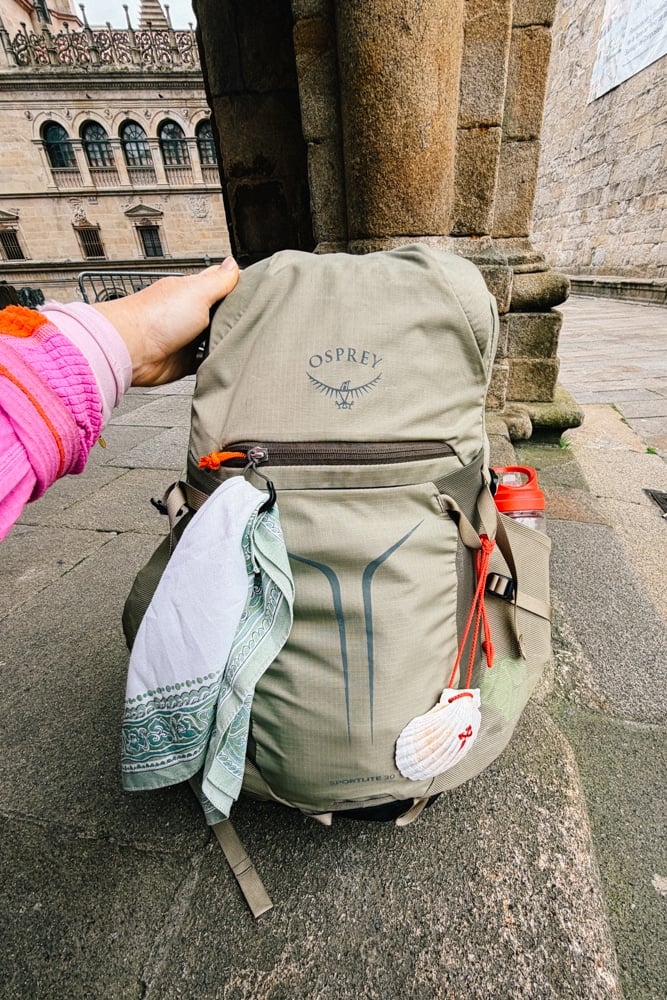
Why You Should Trust My Backpack Opinion (I’m Usually a Checked-Bag Girl)
I’ve been a full-time travel writer for almost a decade now, and I will be the first to admit I am not a natural minimalist packer. I’m a checked-bag girl, I love my Away bag, I really love outfit options.
I travel with a first aid kit because once, on a trip, I drank too much champagne, got brutal heartburn, and there wasn’t a single pharmacy open anywhere near my hotel at 11 p.m. I just suffered through it. I learned my lesson, and now I overpack on purpose.
And, I also travel with work gear. Here’s what normally comes with me on a trip, just so you know where I’m starting from:
- A DSLR camera
- Sometimes a drone and a GoPro
- A laptop and an iPad
- Chargers for all of it
That’s just what being a content creator on the road looks like for me. So when I decided to walk the Camino with everything strapped to my back and no checked bag option, I was actually pretty stressed about it.
You’re supposed to carry somewhere around 10 to 15% of your body weight, and I had no idea how I was going to live out of one hiking backpack for two-plus weeks.
That stress is exactly why I did real research before buying anything, instead of just grabbing whatever REI had in stock.
How I Landed on the Osprey Tempest 33
I tried on more shoe brands than I can count while prepping for this trip (more on that in my full Camino de Santiago packing list), but the backpack decision came down to one moment at a bus stop in San Francisco.
I was waiting for the bus next to two women in full hiking gear, both wearing small Osprey day packs, and it turned out they were about to do the Crosstown Trail, a 16-mile hike across SF. I asked them point blank if they liked their Ospreys. They had nothing but good things to say, and that sealed it for me.
I’ll be honest, when my Tempest 33 first showed up, I panicked a little. It looked tiny sitting empty on my floor, and my first instinct was “I need the 38, or the 44, this is way too small.”
Once I actually sat down and packed strategically instead of just shoving things in, everything fit, with room to spare. That extra room ended up being both a blessing and a slight curse, which I’ll get into.
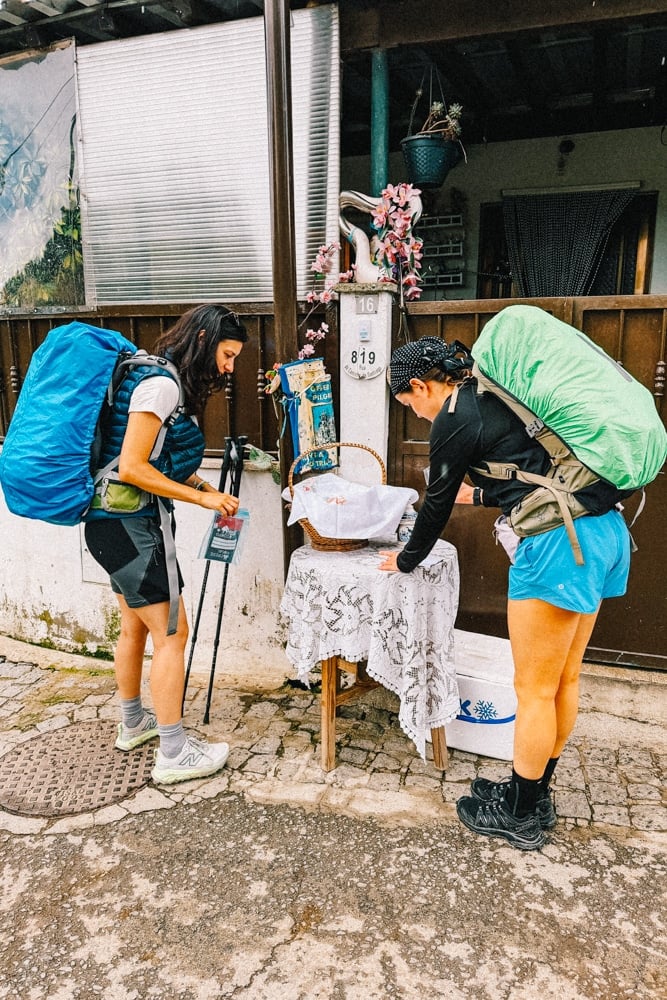
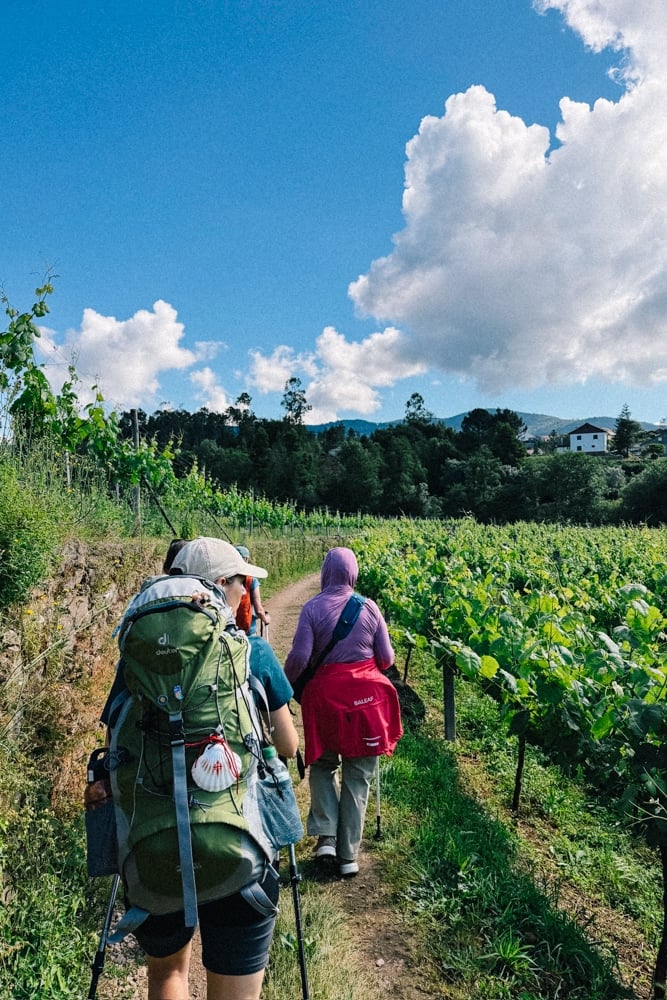
The Osprey Tempest 33 Review After 160 Miles on the Camino Português
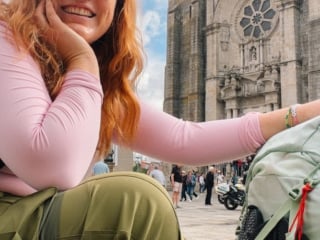
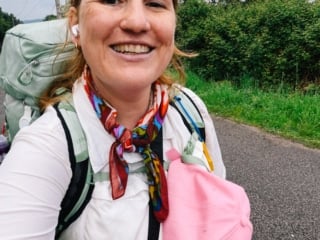
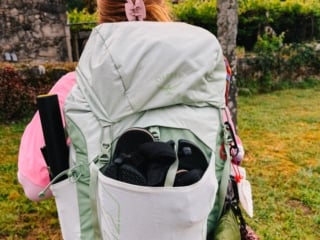
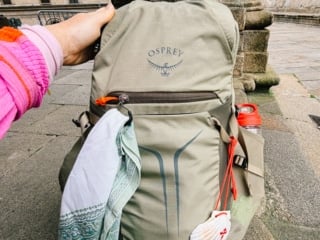
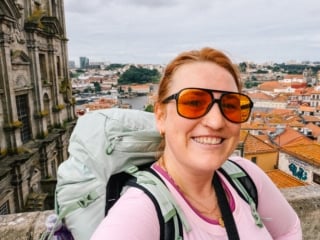
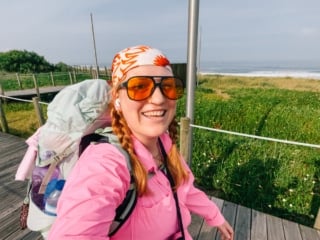
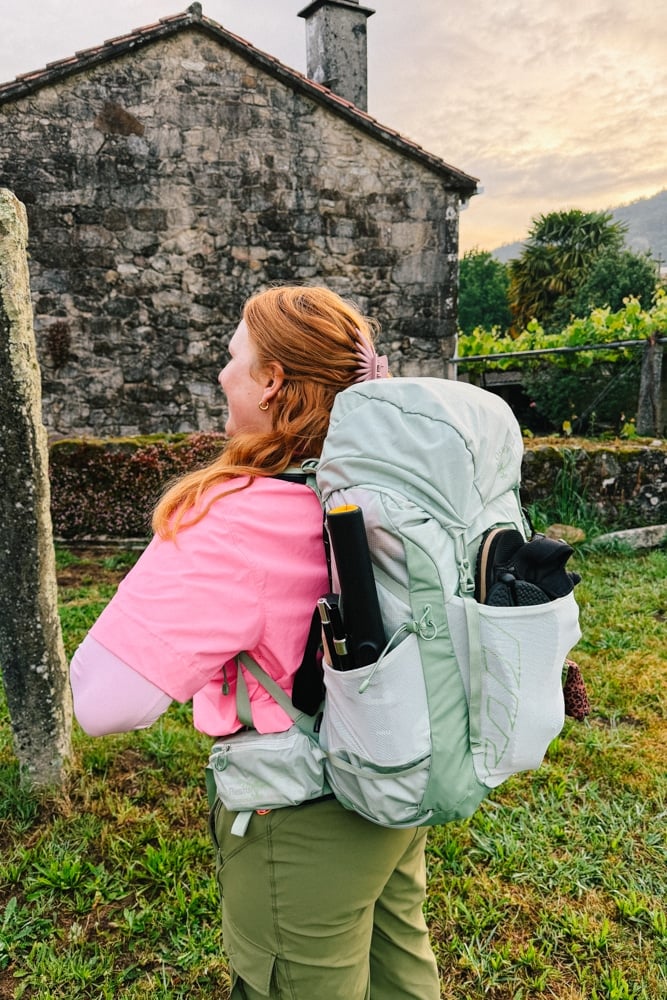
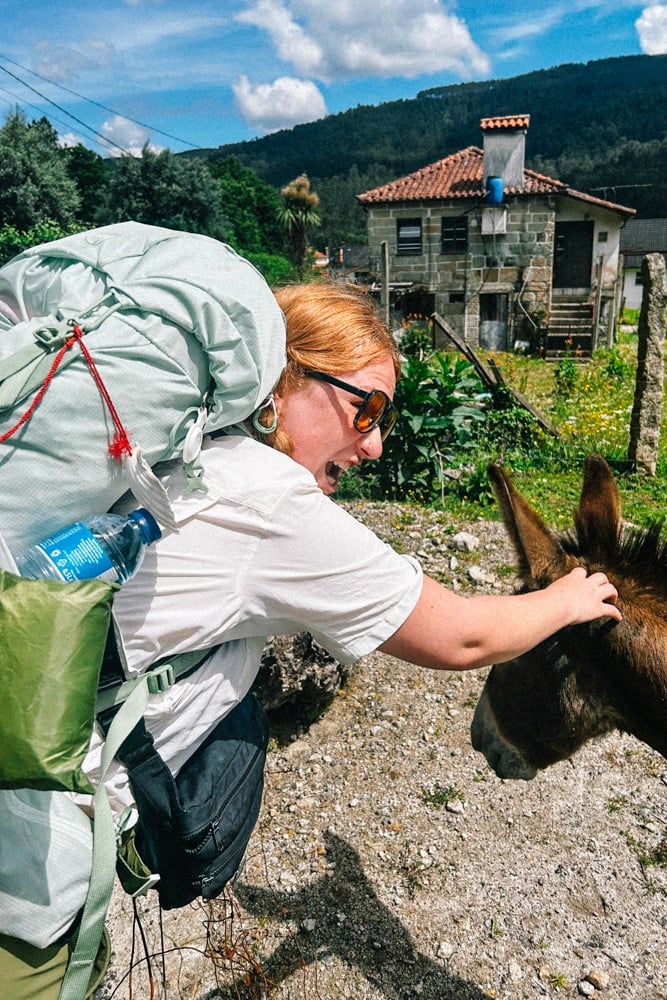
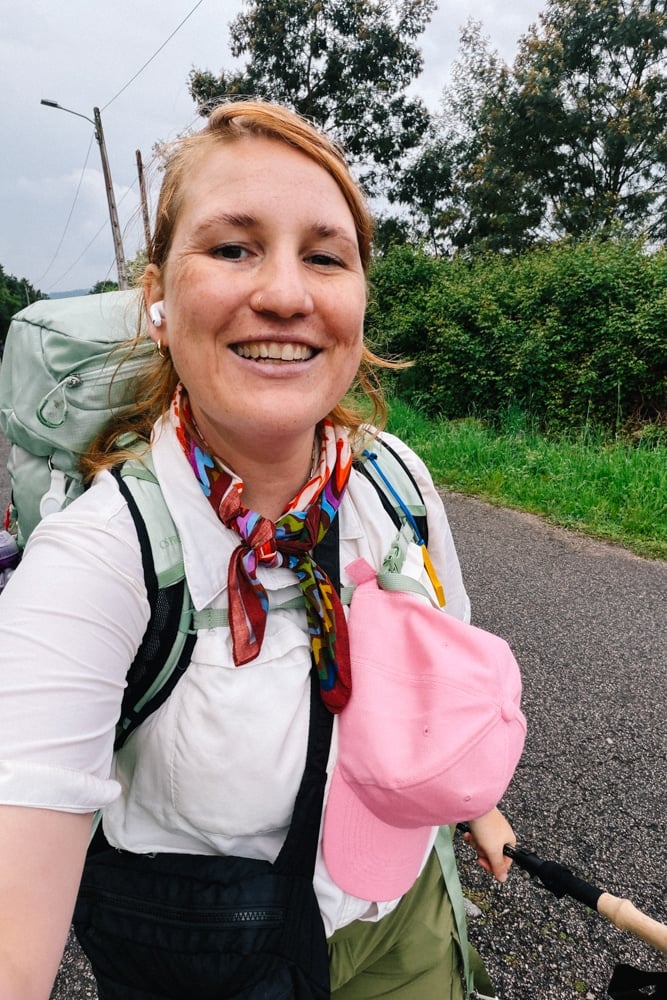
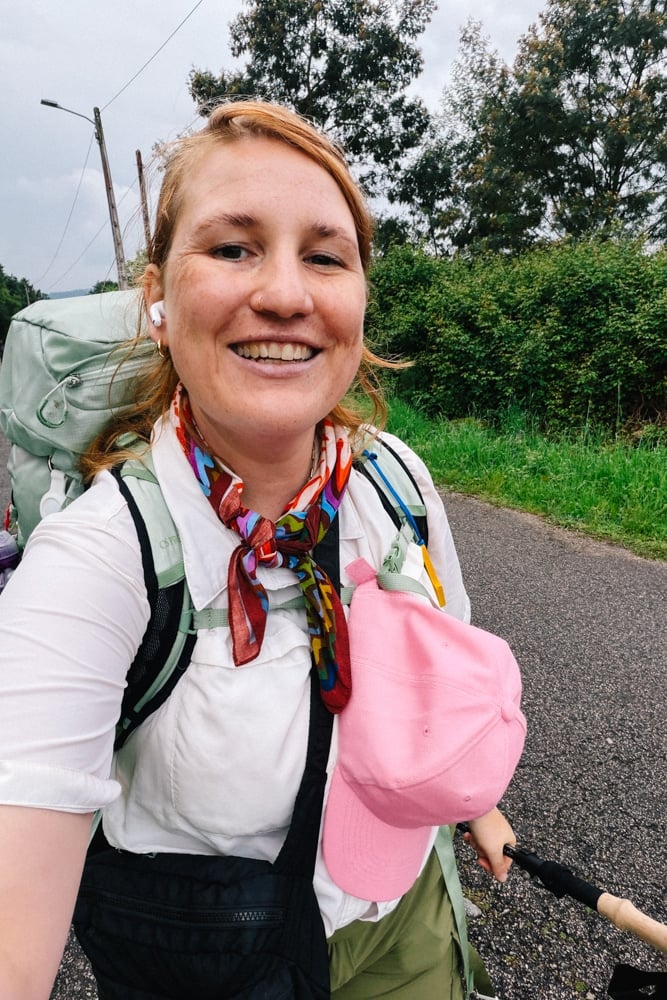
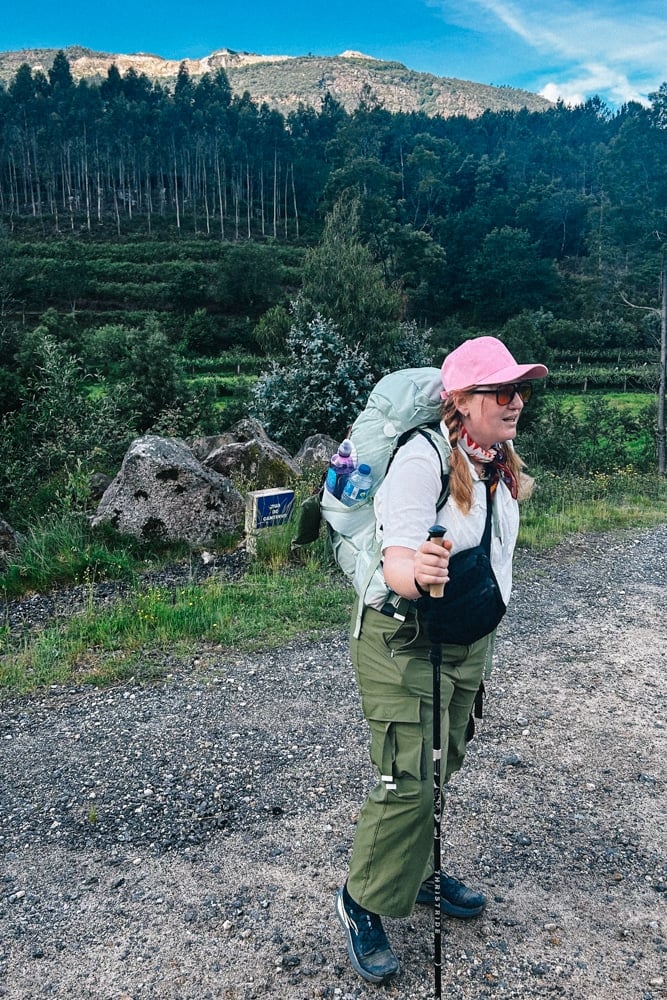
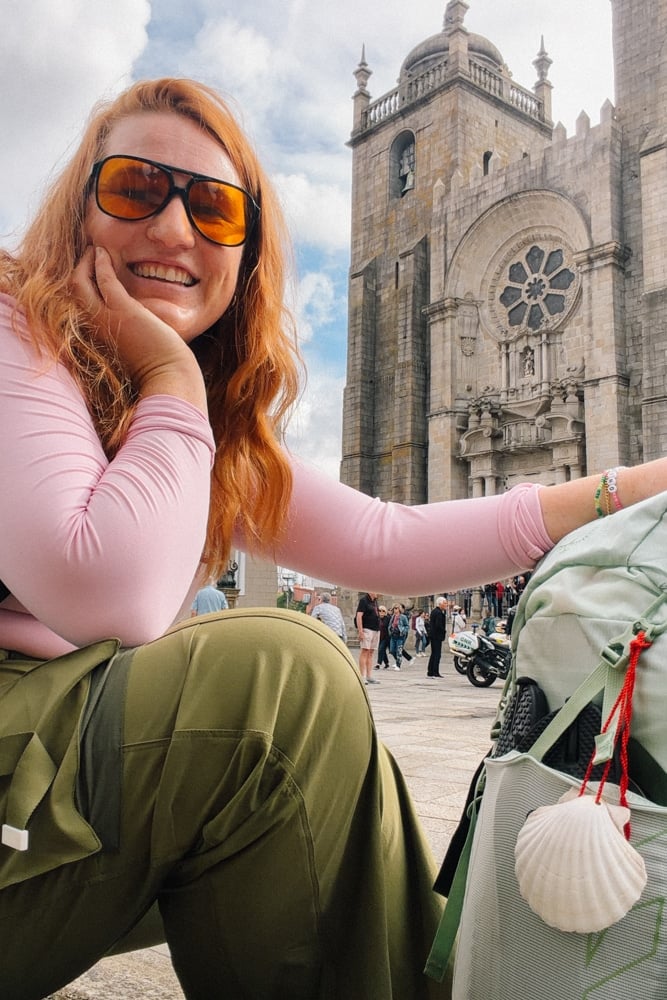
I got mine in Frosty Mint Green/Botanica, which is basically a soft mint green, and I have zero regrets. Multiple people on the trail complimented the color unprompted, and it never looked as dirty as I expected given how much time it spent on bathroom floors, hostel bunks, and actual dirt fields.
The Fit and Comfort
I’m a size 14, about 5’5″, and the continuous-wrap harness and hip belt (Osprey calls this the BioStretch system, though you’ll also see it called a waist belt) adjusted to fit my torso length without any gapping or weird pressure points.
Each shoulder strap adjusts independently too, which mattered on days when one side of my pack sat a little heavier than the other. The sternum strap across my chest took a noticeable amount of weight off my shoulders.
Honestly, this might be the most comfortable backpack I’ve worn for multi-day hiking. I got a massage in Santiago after finishing, and my masseuse straight up told me most pilgrims come in with a ton of back tension and I had almost none, because the pack distributed weight that well.
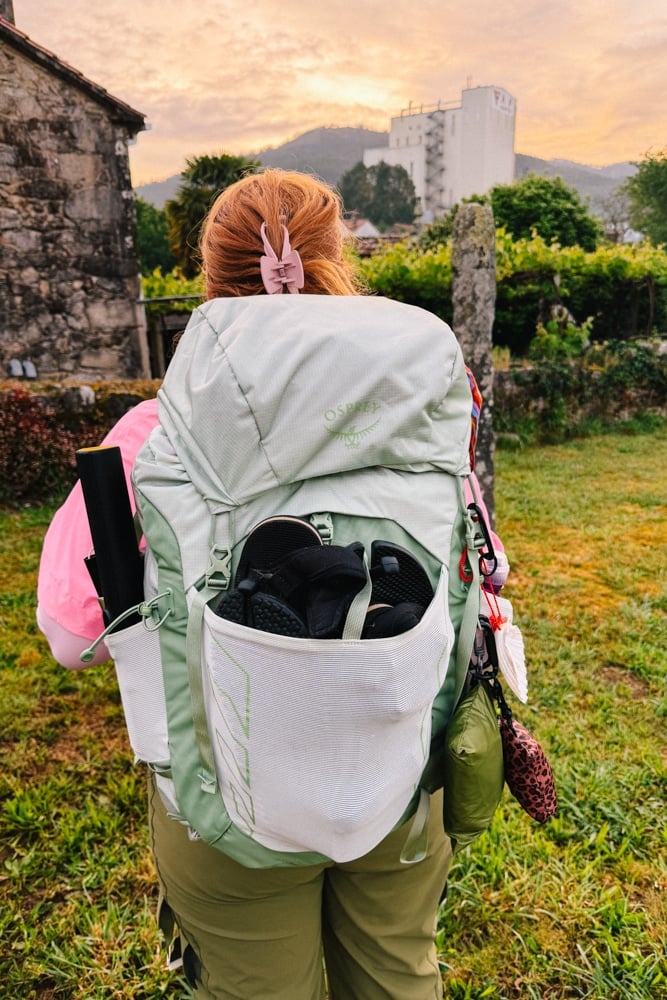
The Pockets (There Are So Many)
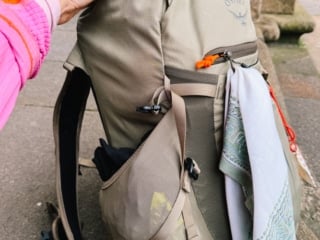
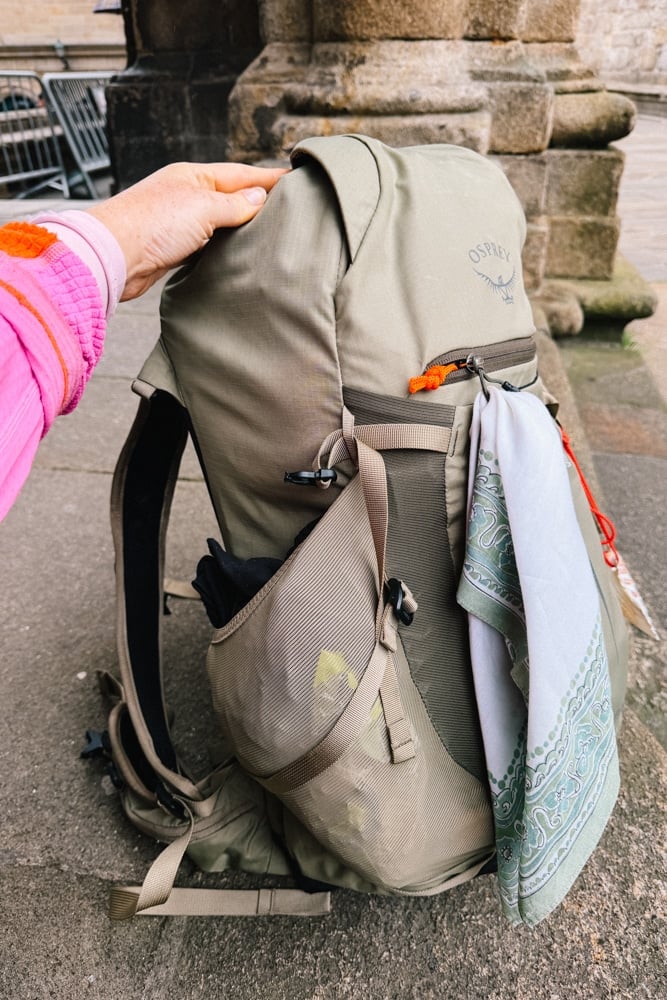
This pack is basically pocket Tetris, and I loved it:
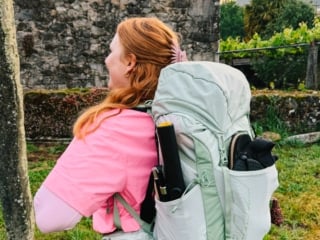
- A large stretch mesh front panel pocket where I kept my Tevas and shower sandals
- Two stretch mesh side pockets, one for my water bottle and electrolyte bottle, one for my hiking poles and phone tripod
- A fixed top lid with an exterior zip pocket and a separate zippered mesh pocket underneath, where I kept meds, sunscreen, and the friendship bracelets and pins I gave out to people on the trail
- Dual-zippered hip belt pockets (some people search for these as belt pockets), which I mostly didn’t use since I already had my fanny pack, but they’re there if you want quick-grab storage for chapstick or coins
- An internal hydration reservoir sleeve built for a hydration bladder, which I actually used to protect my iPad instead of carrying water that way, but it’s ready for either
The dual side compression straps came in handy too, especially toward the end of the trip when my load got lighter (turns out a half pound of Porto trail mix disappears fast, lol).
What I’d Change
The Tempest also has Stow-on-the-Go trekking pole attachments and tuck-away ice axe loops with a bungee tie-off. The trekking pole attachment is actually really useful, I used it constantly.
The ice axe loops, less so, unless you’re planning some extracurricular alpine climbing after Santiago.
The whole thing is made from bluesign-approved, 100% recycled nylon with a DWR treatment that skips PFAS, which I appreciated, since I sweated through this pack and dragged it through mud for two weeks straight, and it held up without falling apart.
Osprey says the back panel is injection molded for a closer fit, and on the trail, that’s exactly how it felt. It didn’t feel floppy. It felt locked in place no matter how much weight I had on board.
The Honest Downsides
No pack is perfect, so here’s what I’d flag before you buy:
- It doesn’t come with a rain cover. I bought a cheap aftermarket one and never once used it because I preferred a hiking poncho instead, but if you want a built-in rain shield, this isn’t it.
- There’s no bottom sleeping bag compartment. Everything lives in one main compartment with a drawstring closure. If you’re staying in traditional public albergues and need to carry your own sleeping bag, you’ll either need to pack lighter elsewhere or size up to the 38.
- The extra room is a trap for overpackers like me. Because I had space left over, I added snacks I didn’t strictly need, which made my pack heavier than it had to be. The pack itself isn’t the problem here, my self-control is.
- The colorway I have tends to sell out, so check current stock at Osprey or REI before you plan your whole packing list around this exact color.
The load range on the Tempest 33 is rated for 10 to 30 lbs, which lines up almost exactly with that 10 to 15% body weight rule everyone tells you to follow, and the pack weight itself is just 2.65 lbs empty, so it’s not eating into your weight budget before you even start packing.
If you look up other Osprey Tempest 33 reviews online, you’ll see the same load range and pack weight numbers, because Osprey doesn’t really change these specs season to season.
Osprey Tempest 33 vs Tempest Pro 30 vs Kyte 38 (How to Pick Your Size)
This is the question I get the most, so here’s my actual framework based on what I saw on the trail and what worked for the people I walked with.
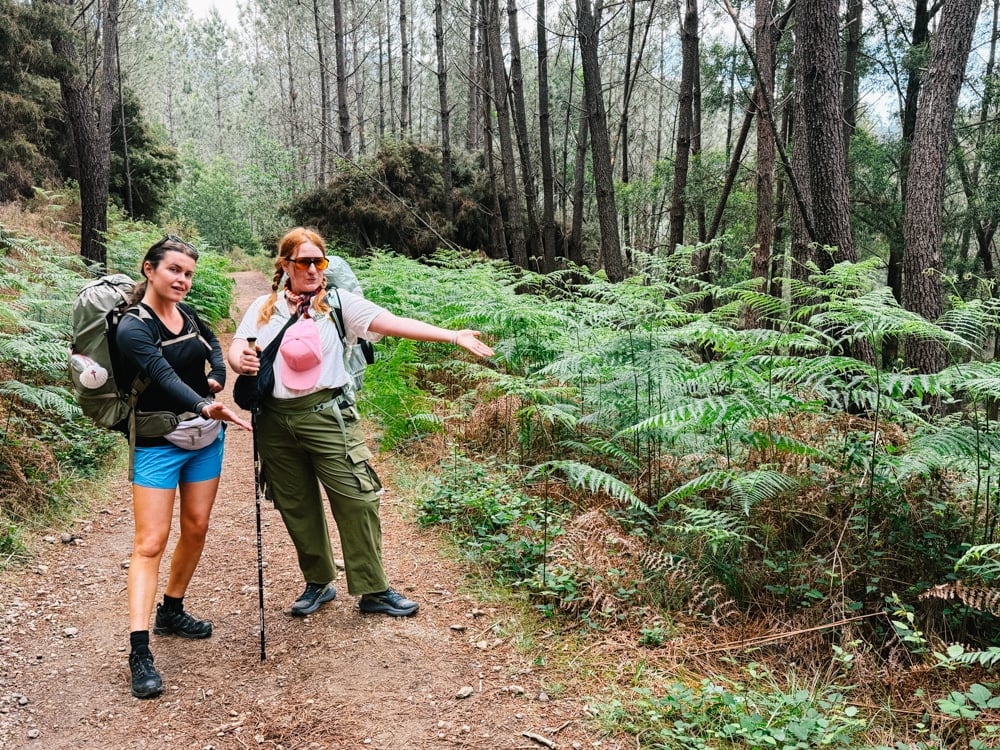
Get the Tempest 33 ($205) if: you’re walking the Camino Português or the full Camino Francés in spring, summer, or fall. This was my exact setup and it held my full kit with room to spare.
It’s also the size I’d recommend for most first-time pilgrims, because it gives you a little margin for error on this 33-liter pack.
Get the Tempest Pro 30 ($250) if: you’re an actual minimalist packer, or you’re only walking a shorter stretch, like the last 100 km starting in Tui. Yes, it’s pricier than the bigger Kyte 38, that’s the “Pro” build for you, lighter materials and a more technical fit packed into a smaller size.
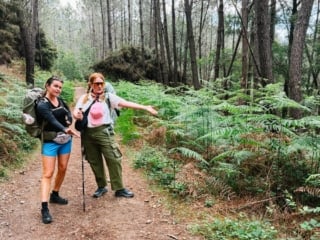
I have a friend with the 30L version, and when I picked up her pack it felt noticeably lighter than mine. She’s a runner who travels lean and flies constantly for work, so packing light is already second nature to her. If that’s you, the 30 will feel great. If you’re not naturally a light packer, don’t go smaller than this.
Get the Kyte 38 ($220) if: you’re walking in winter and need room for a real jacket, warmer sleep layers, or a sleeping bag. I’d also point you here if you know you tend to overpack and want a buffer without going overboard.
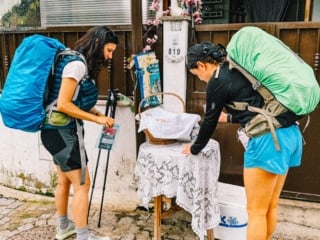
I watched another friend on the trail carry a 44L pack from a German brand I can’t fully recall, and it was way too much pack for what she actually had in it. Don’t go bigger than 38L for this trip. It stops being useful and starts being dead weight on your shoulders.
Any of these three work as a Camino backpack now and a solid day pack for day hikes once you’re home, so the investment doesn’t stop paying off when your Camino ends.
If you’re shopping for a guy in your group instead, Osprey’s equivalent fit for men in this same line is called the Osprey Talon, same design philosophy, just built for a different body.
What Else Went In My Pack
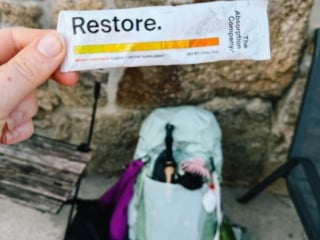
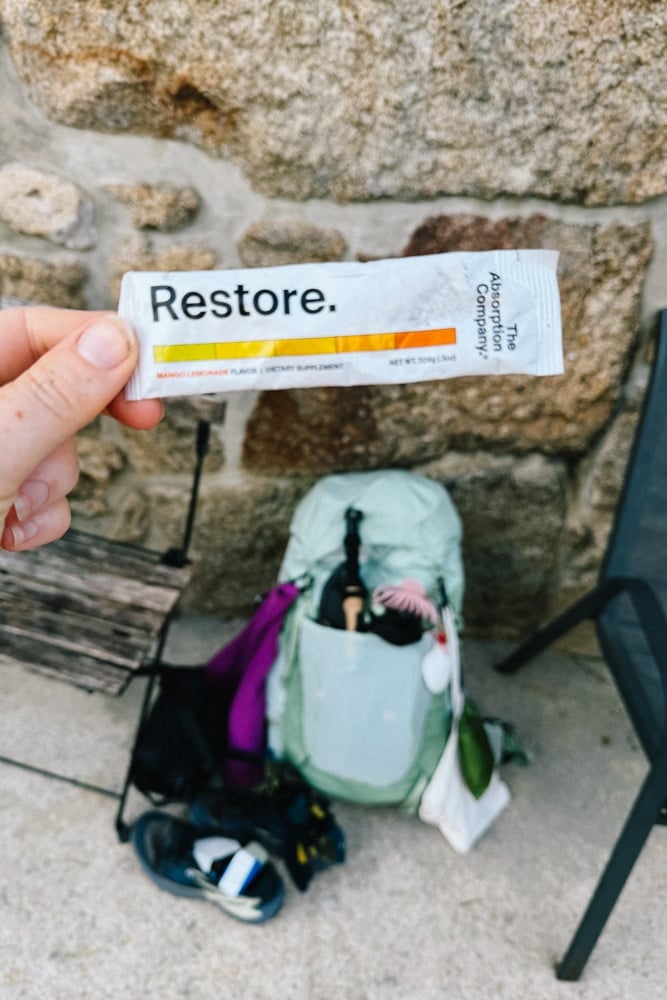
The Tempest 33 was just the container. What actually went inside mattered just as much, from trail runners (do not bring hiking boots) to the socks that saved my feet to the electrolyte packets I started every morning with.
I broke all of that down in my full Camino de Santiago packing list, so if you’re building your kit from scratch, start there once you’ve got your pack sorted.
Frequently Asked Questions About the Best Backpack for the Camino de Santiago
What is the best backpack for the Camino de Santiago?
For most pilgrims walking either the Camino Português or Camino Francés, the Osprey Tempest 33 is the best overall pick. I wore mine for 160 miles, through plenty of rain and mud, and my back never once felt beat up.
What size backpack for Camino de Santiago is best?
For most people, 33 liters is the right size, and that’s also the recommended backpack size for Camino de Santiago that I’d give any first-time pilgrim. Go down to 30L if you’re a minimal packer or doing a shorter route segment, and go up to 38L only if you’re walking in winter and need room for bulkier gear.
What size backpack for Camino Portuguese?
The 33L is the right call for the full Camino Português, whether you’re doing the coastal route, the central route, or splitting time between both like I did. It’s roomy enough for two to three weeks of walking without becoming a burden.
What’s the best backpack for Camino de Santiago women’s fit?
The Osprey Tempest 33 is built as a women’s-specific pack. As a size 14 woman at 5’5″, I had zero fit issues, and the hip belt and harness adjusted easily to my torso length and sat right where they needed to without digging in anywhere.
Do I need a rain cover for my Camino backpack?
The Tempest 33 doesn’t come with one built in. I bought a cheap aftermarket cover and ended up never using it because I preferred wearing a hiking poncho over my whole pack instead. Either method works, it’s really a personal preference.
Where can I buy the Osprey Tempest 33?
You can buy it directly through Osprey or at REI, and it’s also sold on Amazon if you want to compare prices there too. I’d recommend checking reviews and current stock before you commit, since popular colorways like mine sell out fast.
My Final Verdict
If you’re trying to figure out the best backpack for the Camino de Santiago, I’m not going to overcomplicate this for you. Get the Osprey Tempest 33, pack smarter than I did so you don’t end up hauling a half pound of trail mix you didn’t need, and trust the sizing logic above based on your route and season.
Among all the Camino backpacks I researched before this trip, this is the one I’d wear again without hesitation, and I already plan to bring it on my next backpacking trip.
If you’ve already walked the Camino, I want to know what backpack you carried and whether you’d pick the same one again. Drop a comment below and tell me.